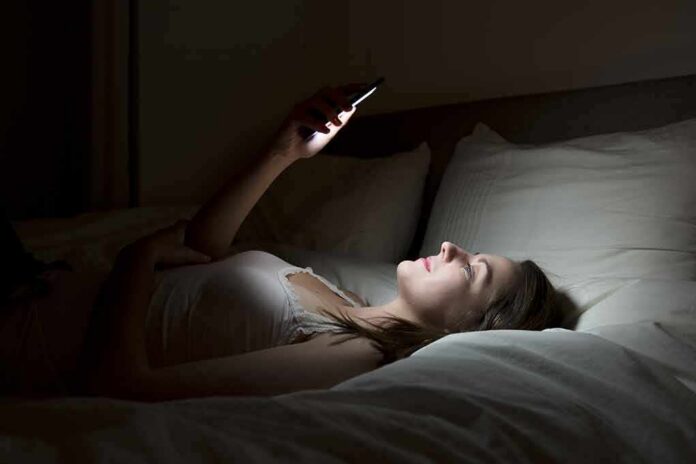
Your bedroom nightlight, glowing phone, or crack in the curtains may be quietly nudging your heart attack and stroke risk up by as much as a third.
Story Snapshot
- Large long-term studies now link brighter night-time light to higher risks of heart attack, stroke, heart failure, and atrial fibrillation.
- Risk climbs step by step as nights get brighter, and the effect looks stronger in women and younger seniors.
- New data suggest artificial light at night may stress the brain, inflame arteries, and disrupt circadian rhythms.
- Researchers cannot yet prove causation, but the pattern fits basic biology and nighttime habits.
The New Heart Threat Hiding In Your Bedroom
Researchers tracking almost 89,000 adults over age 40 in the United Kingdom found that those sleeping in the brightest night-time environments had significantly higher risks of coronary artery disease, heart attack, heart failure, atrial fibrillation, and stroke compared with people whose nights were truly dark.[4][5] Participants wore wrist light sensors for a week, then were followed for about nine and a half years while doctors recorded new cardiovascular diagnoses.[3][4] This was not a hunch; it was a measured exposure and hard outcomes.
The numbers should make anyone with a glowing bedroom pause. Compared with people in the darkest half of the group, those in the top night-light bracket had about 32 percent higher risk of coronary artery disease, 47 percent higher risk of heart attack, 56 percent higher risk of heart failure, 32 percent higher risk of atrial fibrillation, and 28 percent higher risk of stroke, even after adjusting for smoking, alcohol, exercise, diet, sleep duration, income, and genetic risk.[4][5] These are moderate but very real increases, not statistical noise.
Why Circadian Disruption Matters
The obvious question is whether light at night truly harms the heart or just tags along with sloppy lifestyles. The cohort researchers anticipated that critique and adjusted for an extensive list of usual suspects, including physical activity, body weight, and other cardiovascular risk factors.[4][5] Associations still held, which suggests night light is more than a proxy for bad habits. Harvard’s summary points out that circadian rhythm disruption and sleep disturbance remain the leading biological explanations.[3]
Artificial light at night tells your brain it is still daytime, suppressing melatonin, altering blood pressure patterns, and encouraging late eating and late scrolling. A separate American Heart Association analysis in Boston found that higher artificial night light exposure correlated with heightened stress activity in the brain, inflamed arteries, and higher risk of major heart events.[2] Every standard deviation increase in night light exposure raised heart disease risk by about 35 percent over five years in that sample, even after controlling for classic risk factors and neighborhood noise.[2]
Bright Nights, Dose Response, And Who Seems Most At Risk
Cardiovascular researchers take dose-response patterns seriously because they often separate real signals from coincidence. In the United Kingdom cohort, heart risk climbed steadily from darker to brighter nights, rather than jumping only at extreme exposures.[4][5] People in the mid-range light levels already showed higher coronary artery disease and heart failure risk compared to those with truly dark nights, and the risk rose further in the brightest group.[4] That gradual staircase pattern strengthens the case that light itself plays a role.
Subgroup data raise another eyebrow. Women showed larger risk increases for heart failure and coronary artery disease than men at similar night-light levels.[1][5] Younger participants in the over-40 cohort, rather than the oldest, showed stronger links for heart failure and atrial fibrillation.[1][5] Those patterns suggest that “I am getting older anyway” is not a sufficient excuse. The environment you sleep in may amplify or blunt the wear-and-tear already coming with age.
What We Still Do Not Know
Honesty matters here: these are observational studies, not randomized trials. The authors themselves acknowledge they cannot prove that night light independently causes heart disease.[1][4][5] Skeptics correctly note that no model can perfectly adjust for shift work, bedroom window exposure, neighborhood density, or undiagnosed sleep apnea.
3. Surfing Before Bed
Scrolling through your phone at night may feel harmless, but the blue light from screens disrupts sleep cycles. Poor sleep affects memory, mood, and long-term health. Swap late-night scrolling for a book, and keep your bedroom dark and quiet to promote… pic.twitter.com/hzvlVJTfFt— Mreathworm (@mreathworm) June 1, 2026
Reliable adults do not need federal mandates, gadget bans, or moral panics to act on low-cost, low-intrusion changes. If bright nights are even partially responsible for a 30 to 50 percent increase in heart events over time, then dimming indoor lights, closing blinds, and parking screens away from the bed become the kind of personal responsibility that aligns with both liberty and self-preservation. You control your bedroom environment more easily than your taxes, your genetics, or your city’s traffic.
How To Use This Research Without Joining The Panic Industry
Health media will happily turn nuanced hazard ratios into scare slogans about phones “silently killing you.” That is marketing, not medicine. The United Kingdom cohort’s authors stress that avoiding night light should complement, not replace, proven measures like controlling blood pressure, quitting smoking, and exercising consistently.[4][5] The American Heart Association’s commentary similarly frames night light as one modifiable piece of a larger cardiovascular risk puzzle.[2]
A sober way forward keeps the signal but drops the hysteria: treat a dark bedroom as another basic hygiene habit, like wearing a seat belt. Keep outdoor light from flooding the room, use the dimmest lamp needed for safety, avoid falling asleep with the television on, and set a clear “screens off” time before bed. Those steps cost almost nothing, respect personal freedom, and lean into the emerging evidence without pretending that one cohort study has fully settled the science.
Sources:
[1] Web – This Common Nighttime Habit May Raise Heart Disease Risk By Up To 35%
[2] Web – Night light exposure is linked to cardiovascular diseases among …
[3] Web – Study finds bright nights raise risk for stroke and heart failure in …
[4] Web – Light Exposure at Night and Cardiovascular Disease Incidence – PMC
[5] Web – Nighttime light exposure linked to heart disease – Harvard Health