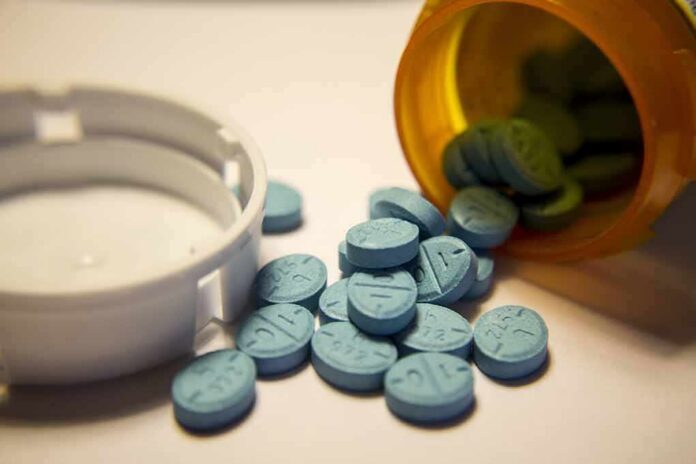
One pill, no history of ADHD, no second dose needed — and a healthy young adult’s blood pressure jumped 10 points within hours, according to a new clinical trial.
Quick Take
- A Mayo Clinic Proceedings trial gave healthy, stimulant-naive young adults a single 25 mg dose of Adderall, the amount researchers say is commonly misused by young adults.
- Systolic blood pressure rose from 116 to 126 mmHg, heart rate climbed by 10 beats per minute, and stress hormone norepinephrine spiked after just one dose.
- Every participant also took a placebo in a randomized, double-blind design, and the placebo produced no changes at all.
- The study measured acute physical stress on the heart, not heart attacks or deaths, so real-world event rates remain unknown.
What The Trial Actually Measured
Researchers at Mayo Clinic ran a randomized, double-blind, placebo-controlled crossover trial on healthy volunteers who had never taken Adderall and did not have ADHD. Each person received both a real 25 mg dose and an identical-looking placebo on separate occasions. The study ran from mid-2018 through mid-2021, giving scientists years to track consistent, repeatable results across dozens of controlled sessions.
The design matters because it isolates the drug’s effect from guesswork. Nobody knew which session was real and which was fake, including the people running the tests. That kind of control is the gold standard in medical research, and it’s why these numbers carry real weight instead of just being an alarming anecdote from an emergency room.
The Numbers Behind The Warning
Systolic blood pressure rose from 116 to 126 mmHg after the real dose, while placebo caused no change at all, a difference researchers called statistically powerful. Diastolic pressure climbed 6 points, average blood pressure rose 7 points, and heart rate sped up by 10 beats per minute. Every one of those shifts hit strong statistical significance, meaning they were extremely unlikely to be random chance or coincidence.
Underneath those numbers sat a biological signal pointing to the body’s stress response kicking into gear. Plasma norepinephrine, a hormone the body releases during fight-or-flight, jumped from 215 to 301 picograms per milliliter after Adderall, with no shift on placebo. That’s the chemical signature of a nervous system suddenly told to brace for danger, triggered by a pill, not a real threat.
Why Researchers Chose This Specific Dose
The study’s own protocol explains the dose choice directly: 25 mg of generic short-acting Adderall was selected because it’s the amount commonly misused by young adults. That’s not a random lab number pulled from a textbook. It reflects what actually happens on college campuses, at finals time, and in late-night study sessions where a borrowed pill feels harmless.
Senior author Dr. Anna Svatikova put the finding in plain terms, saying a single 25 mg dose triggers real jumps in blood pressure, heart rate, and the body’s stress-response system, even in people who’ve never taken it before. That phrase, “even in individuals with no prior exposure,” matters. There’s no tolerance built up, no prior use cushioning the reaction. The first pill hits the hardest, not the safest.
What Remains Unmeasured
The trial tracked physical stress signals, not actual heart attacks, strokes, or deaths. Researchers studied 29 completed sessions, a group large enough to detect real physiological change but too small to calculate how often rare, catastrophic events might follow. That’s a meaningful distinction for anyone scaling this to real-world risk.
Real-world recreational use often looks different from the lab, too. Study volunteers were healthy and took one controlled oral dose. Actual misuse can involve higher amounts, repeated dosing, crushed or snorted pills, or mixing with alcohol, caffeine, or nicotine, each of which could push the cardiovascular system harder than anything measured here. The FDA’s own label already warns that stimulant misuse carries risks of irregular heartbeat and dangerous blood pressure swings.
The Bigger Picture On Stimulant Safety
None of this undercuts Adderall’s legitimate medical use for people properly diagnosed with ADHD and monitored by a doctor. Therapeutic doses, prescribed and supervised, are a different exposure than a borrowed pill swallowed before an exam. Conflating the two does a disservice to patients who genuinely benefit from treatment under medical care.
What this trial delivers is hard evidence that casual, unsupervised stimulant use isn’t the low-risk shortcut some young adults assume it is. A drug that can spike blood pressure and flood the body with stress hormones on the very first try deserves to be treated with the seriousness that prescription status was always meant to provide.
Parents, coaches, and campus health offices now have a concrete, peer-reviewed data point instead of just a gut feeling that something’s off. That’s a meaningful shift in a debate too often driven by anecdotes instead of controlled science.
Sources:
youtube.com, mayoclinic.elsevierpure.com, pubmed.ncbi.nlm.nih.gov, healthday.com