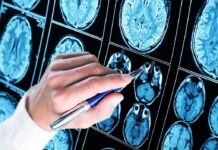
Some people hit 80 with a brain that behaves like it is 50, and now we know their secret is not luck, but a factory of new neurons still humming deep in the hippocampus.
Story Snapshot
- SuperAgers in their 80s remember like people 30 years younger.
- Their hippocampi generate roughly 2–2.5 times more new neurons than their peers.
- A unique “resilience signature” in brain cells keeps memory machinery switched on.
- Genes like APOE tilt the odds, but lifestyle and brain plasticity still matter.
Why Some 80-Year-Olds Remember Like They Are 50
Picture two 82-year-olds taking the same memory test. One strains to recall a short list of words. The other breezes through like a sharp 50-year-old. Scientists call that second person a SuperAger: an adult over 80 whose episodic memory scores match or exceed people decades younger on rigorous standardized tests. This is not about winning a crossword contest; it is about laboratory-grade proof that the brain’s “record button” can stay young while the body clearly does not.
For years, SuperAgers looked like statistical unicorns, the human version of a car that refuses to rust. Brain scans from Northwestern’s long-running SuperAger Program showed thicker cortex in key attention and memory regions and surprisingly low levels of Alzheimer’s plaques and tangles. They stayed socially engaged, emotionally resilient, and mentally active, yet no one could say exactly why their circuitry resisted the wear and tear that hits nearly everyone else.
The Massive Brain Study That Cracked Open The Mystery
The turning point came when researchers from the University of Illinois Chicago and Northwestern went straight to the source: donated hippocampal tissue from the brains of SuperAgers, typical older adults, people with early dementia, Alzheimer’s patients, and much younger controls. Using cutting-edge multiomic single-cell sequencing on more than 350,000 cell nuclei, they stopped arguing about theories and started counting what matters most for memory: brand-new neurons born late in life.
The hippocampus, a seahorse-shaped structure deep in the brain, files your experiences into long-term memory. For decades, scientists fought over whether humans still grow new hippocampal neurons as adults or whether that capacity mostly shuts down after childhood. Animal work said yes. Conflicting human data said maybe, or even no. This new study settled the question with unforgiving resolution, mapping each cell’s identity and developmental stage rather than squinting through a microscope and guessing.
SuperAgers’ Brains Run A Youth Program For Neurons
The verdict was stark. SuperAgers’ hippocampi produced roughly two to two-and-a-half times more new neurons than those of cognitively normal older adults and people with Alzheimer’s disease. Their brains were not just avoiding damage; they were actively replenishing the memory machinery. That is like comparing an old town that patches potholes to one that keeps pouring fresh pavement. Both age, but one still drives like new because the maintenance never really stops.
Researchers also uncovered a distinctive “resilience signature” in SuperAgers’ hippocampi. Support cells called astrocytes and key CA1 pyramidal neurons preserved gene programs for cell survival and synaptic communication that largely shut down in Alzheimer’s. In plain English, the neighborhoods where new neurons must grow and connect stayed friendly, well-supplied, and wired for conversation. In diseased brains, those same neighborhoods turned hostile, making it far harder for new cells to take root and participate in memory networks.
Genes Tilt The Playing Field But Do Not Dictate The Score
While the cell-level picture was coming into focus, a Vanderbilt-led study looked at genetics in thousands of adults over 80. SuperAgers were significantly more likely to carry APOE-ε2, a variant associated with protection from Alzheimer’s, and much less likely to carry APOE-ε4, the infamous risk-boosting version. That pattern suggests a genetic edge: some people are born with brain biochemistry that favors resilience, fewer tangles, and more durable synapses well into old age.
Genetics, though, is not destiny. Even in these studies, plenty of people with “bad” genes never developed dementia, and not every SuperAger carried the most favorable variants. That aligns with common-sense conservative thinking about personal responsibility and risk: the hand you are dealt matters, but how you play it still counts. The research points to a blend of constitutional advantages and lifelong habits rather than a fatalistic “your DNA decides everything” worldview.
From Lab Bench To Living Room: What This Means For Aging Brains
The implications are enormous for anyone who wants to stay independent, sharp, and productive rather than drift into years of expensive, dignity-eroding care. First, human brains remain plastic far longer than medical pessimists claimed. Adult hippocampal neurogenesis is real, measurable, and meaningfully higher in those who preserve memory. That undercuts the narrative that decline is automatic after some arbitrary birthday and supports investments in prevention rather than endless late-stage management.
Second, the study gives drug developers concrete targets: pathways that support neurogenesis, preserve excitatory synapses, and keep those resilience gene programs switched on. At the same time, decades of observational work on SuperAgers highlight behaviors regular people can actually control: sustained social engagement, mentally demanding work, consistent physical activity, and emotional resilience. Limited data exist on which specific habit “flips” the neurogenesis switch, but the broad pattern favors disciplined, engaged living over passive drift.
For policy makers and families, the stakes are practical, not abstract. Dementia already strains Medicare, Medicaid, and household budgets. If understanding SuperAgers helps delay cognitive decline even a few years for millions, that means fewer people in costly institutions, more elders guiding grandkids, churches, and businesses, and less pressure to expand bureaucratic programs. The new science says the brain can help itself longer than we thought. The question now is whether our culture will support people in giving it that chance.
Sources:
As SuperAgers age, they make at least twice as many new neurons as their peers
As SuperAgers age, they make at least twice as many new neurons as their peers
Super-Agers Have Genetic Edge for Brain Health, Study Suggests
What ‘Super-Agers’ Can Teach Us About the Aging Brain