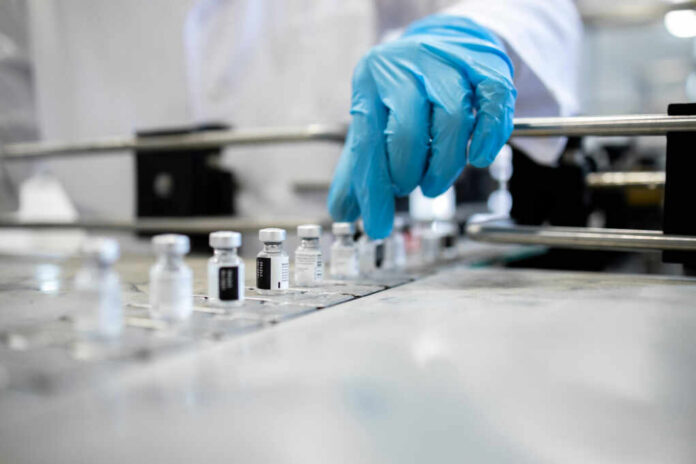
A compound NASA developed to keep astronauts’ teeth from disintegrating in space has quietly become the most serious challenger to fluoride toothpaste’s half-century dominance.
Story Snapshot
- NASA created synthetic hydroxyapatite in the 1970s to combat astronaut bone and tooth mineral loss in zero gravity
- Japan launched the first commercial hydroxyapatite toothpaste in 1980, officially recognizing it as anti-cavity by 1993
- Clinical trials demonstrate hydroxyapatite performs as well as or better than fluoride in preventing cavities, remineralizing enamel, and reducing sensitivity
- Europe and Canada have approved hydroxyapatite products, but the FDA has not, leaving American consumers in a regulatory gray zone
- The compound works through multiple mechanisms without killing beneficial oral bacteria, representing a fundamentally different approach than fluoride
From Orbit to Your Bathroom Cabinet
NASA engineers faced an unusual problem in the 1970s. Astronauts floating in microgravity were losing minerals from their bones and teeth at alarming rates. The solution they devised was synthetic hydroxyapatite, a calcium phosphate compound that could restore what weightlessness stripped away. What began as specialized space medicine sat dormant in NASA’s patent portfolio until 1974, when Japanese entrepreneur Shuji Sakuma recognized something NASA researchers had overlooked: this space-age material was chemically identical to the mineral comprising 97 percent of human tooth enamel.
Sakuma spent the late 1970s developing a practical application, working to incorporate nano-sized hydroxyapatite particles directly into toothpaste formulations. His timing was strategic. Japan had not widely embraced fluoride treatments the way the United States had, creating a market hungry for cavity prevention alternatives. When Sangi launched Apadent in 1980, it became the world’s first commercial nano-hydroxyapatite toothpaste, entering a market with minimal fluoride resistance and substantial regulatory receptiveness.
Clinical Validation Builds Across Decades
The Japanese market provided an ideal testing ground. A landmark study from 1983 to 1986 tracked 181 Japanese schoolchildren, comparing hydroxyapatite users against control groups. The results were compelling: significantly lower rates of decayed, missing, and filled teeth in the hydroxyapatite cohort. This research foundation proved sufficient for Japan to officially recognize hydroxyapatite as an anti-caries agent in 1993, granting it regulatory legitimacy alongside fluoride.
Recent randomized controlled trials have reinforced these early findings with more rigorous methodology. A one-year study by Paszynska and colleagues found hydroxyapatite toothpaste performed equivalently to fluoridated formulations in young children, with 72.2 percent of the hydroxyapatite group experiencing caries development or progression compared to 74.2 percent in the fluoride group. A German multi-center trial across five university hospitals demonstrated non-inferiority in high-risk orthodontic patients, a population particularly vulnerable to decay. The clinical evidence now spans five randomized controlled trials, establishing hydroxyapatite’s credentials through the gold standard of medical research.
How the Compound Actually Works
Hydroxyapatite operates through mechanisms distinct from fluoride’s approach. The nano-particles physically deposit onto demineralized enamel surfaces, filling microscopic defects and restoring mineral density. This direct remineralization differs fundamentally from fluoride, which primarily strengthens existing enamel structure by converting hydroxyapatite into fluorapatite. Beyond remineralization, hydroxyapatite impedes bacterial adherence to tooth surfaces and reduces early biofilm formation—the sticky foundation of plaque and decay.
What makes this antibacterial action particularly noteworthy is what it doesn’t do. Unlike chlorhexidine and other bactericidal agents, hydroxyapatite doesn’t kill beneficial oral bacteria. It simply makes tooth surfaces less hospitable to harmful species without disrupting the oral microbiome’s delicate ecosystem. For dental researchers, this selectivity represents a significant advantage, preserving the beneficial flora that contribute to overall oral health while still preventing the pathogenic processes that cause decay.
The Applications Keep Expanding
Clinical trials have documented hydroxyapatite’s effectiveness well beyond basic cavity prevention. Studies dating to 1987 demonstrate relief for dentin hypersensitivity, that sharp pain triggered by hot, cold, or sweet stimuli affecting millions of adults. Research shows hydroxyapatite toothpaste outperforms fluoridated alternatives at restoring the appearance of white spot lesions, those chalky discolorations that plague patients after orthodontic treatment. The compound has expanded beyond toothpaste into mouthwashes, polishing pastes, whitening liquids, and specialized oral care gels.
Dental professionals now recommend hydroxyapatite formulations for specific clinical scenarios where its properties offer distinct advantages. Post-orthodontic patients benefit from its superior white spot lesion treatment. High-caries-risk populations, including immunocompromised individuals, gain equivalent protection without fluoride exposure concerns. Patients with persistent sensitivity find relief through a mechanism that physically seals exposed dentin tubules rather than merely masking symptoms.
The American Regulatory Exception
Europe approved hydroxyapatite for commercial use in 2006. Canada followed in 2015. Japan has recognized it officially since 1993. The United States stands apart. The FDA has not approved any hydroxyapatite toothpaste, and the American Dental Association has not granted its Seal of Acceptance to hydroxyapatite products. American consumers can purchase hydroxyapatite toothpaste through online retailers, operating in a regulatory gray zone where products are available but lack official endorsement.
This regulatory divergence reflects different risk-benefit assessment frameworks rather than conflicting scientific evidence. The same clinical trials convincing European and Canadian authorities have not swayed American regulators. Whether this represents more stringent approval criteria, institutional inertia favoring the established fluoride paradigm, or legitimate safety concerns the FDA hasn’t publicly articulated remains unclear. What’s certain is that Americans face a peculiar situation: access to a compound with substantial international clinical validation and regulatory approval, yet without domestic official recognition.
What This Means for Your Dental Health Choices
Hydroxyapatite presents a genuine alternative backed by randomized controlled trial evidence, not a marginal niche product. For consumers concerned about fluoride exposure, whether due to fluorosis risks in young children or personal preference, hydroxyapatite offers clinically validated equivalency. The preservation of beneficial oral bacteria represents a conceptual advantage, aligning with growing understanding of microbiome health’s importance. The compound’s multiple mechanisms—remineralization, bacterial adherence reduction, sensitivity relief—address oral health through pathways fluoride doesn’t target.
The American regulatory situation requires consumer discernment. Products available online lack FDA approval and ADA endorsement, placing responsibility on individuals to evaluate evidence and make informed choices. The clinical research demonstrates safety and efficacy across international studies, but American consumers navigate without the institutional guardrails they’ve come to expect. This represents both opportunity and risk: access to innovation ahead of official approval, but without the regulatory safety net.
The hydroxyapatite story illustrates how space exploration yields unexpected terrestrial benefits, how international markets can drive innovation American regulators later consider, and how scientific evidence can challenge entrenched paradigms. Whether hydroxyapatite eventually gains FDA approval or continues its current regulatory limbo, it has already demonstrated that alternatives to fluoride can meet rigorous clinical standards. For consumers, dental professionals, and the oral care industry, that represents a fundamental shift in possibilities.
Sources:
Hydroxyapatite – StatPearls – NCBI Bookshelf
Hydroxyapatite toothpaste for adults and children – PMC
Hydroxyapatite as an Active Ingredient of Toothpastes – Frontiers
NASA and Hydroxyapatite Toothpaste – Wellnesse
Hydroxyapatite Toothpaste: Is It Safe and Effective? – WebMD