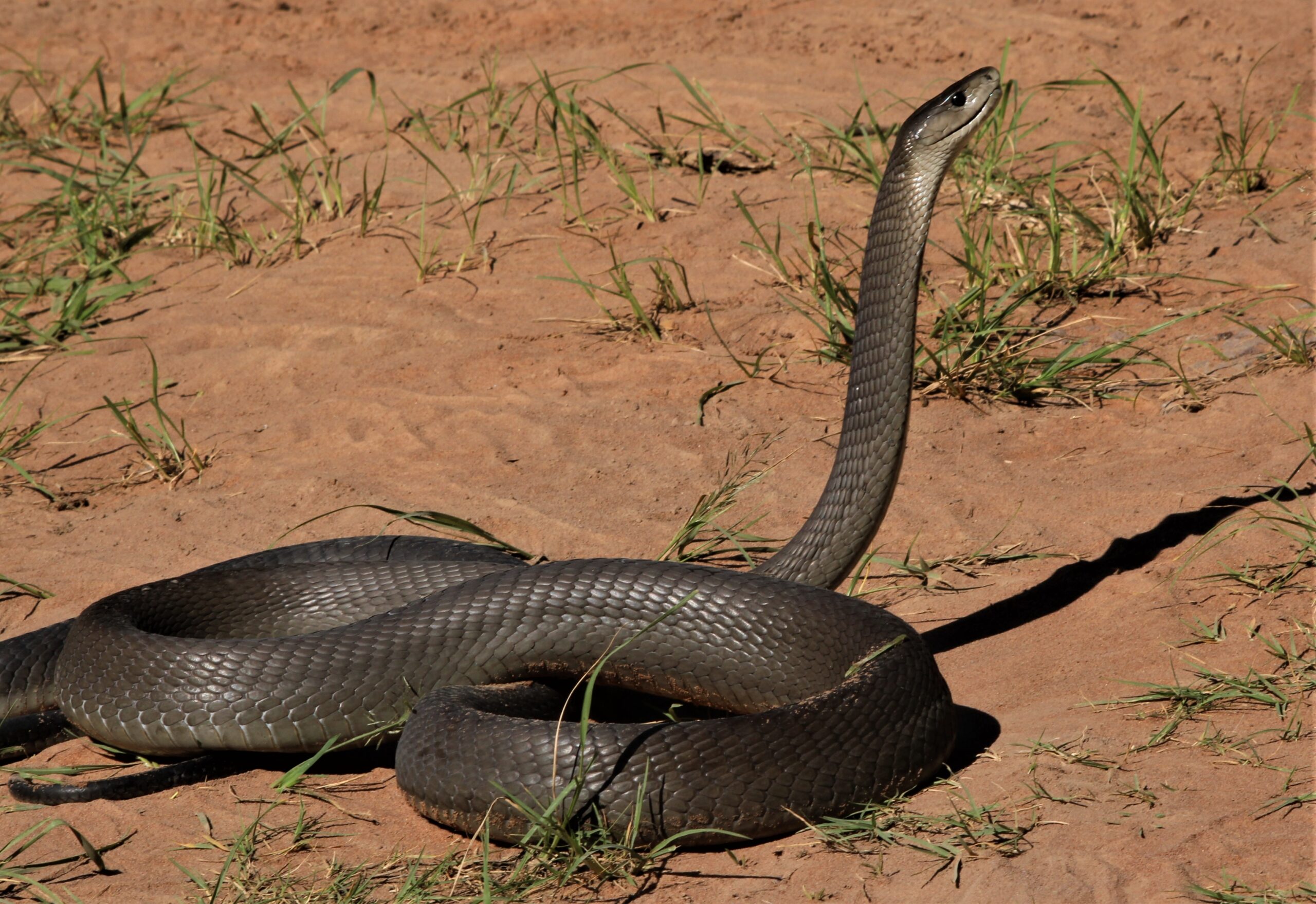
Black mamba venom doesn’t just kill—it outsmarts: scientists have discovered a sinister “second strike” hiding in plain sight.
Story Highlights
- Black mamba venom orchestrates a dual neurological attack, first paralyzing, then triggering violent spasms during recovery.
- This hidden “second strike” explains antivenom failures and challenges assumptions about snakebite treatment.
- Researchers believe this dual-action venom is unique among snakes, revealing new evolutionary arms races in nature.
- The discovery could revolutionize antivenom research and save lives across Africa.
The Black Mamba’s Deceptive Silence
Black mambas, long feared for their speed and deadly accuracy, have always been more than just venomous snakes. Their venom, a chemical marvel, has historically been known for its speed—incapacitating prey and humans alike in minutes. What has baffled herpetologists and emergency physicians for years is the stubborn failure rate of antivenom, sometimes even after swift intervention. The answer, recent research suggests, lies in a previously unrecognized, ruthless strategy within the venom itself.
Victims of black mamba bites often experience a chilling calm before the storm: paralysis creeps in, muscles go limp, and breathing becomes labored. This is the bite’s first act—a neurotoxic assault shutting down communication between nerves and muscles. Fast-acting antivenoms can, in the best cases, reverse this paralysis and restore hope. Yet, as many survivors and doctors have reported, the story rarely ends there.
Black mamba venom has a deadly hidden second strike https://t.co/Y2U82TwwNd
— Zicutake USA Comment (@Zicutake) September 30, 2025
Science Unmasks the Second Strike
Scientists probing the molecular cocktail of black mamba venom have discovered that the paralysis is only the opening gambit. Once antivenom begins to neutralize the toxins responsible for limp paralysis, a secondary wave of venom components triggers the nervous system to unleash intense, uncontrollable spasms. This “second strike” is so severe that it can overshadow the apparent recovery, plunging patients into agony and, in some cases, back into mortal danger.
Lab studies confirm that this two-pronged attack isn’t accidental. The first toxins bind to specific neural receptors, blocking movement; the second set, previously overlooked due to their late onset, hijack different pathways to cause hyperactivity and pain. The antivenom, engineered to target only the most obvious toxins, can be left powerless against the venom’s hidden arsenal. This explains why some patients worsen after initial improvement, and why even advanced hospitals sometimes lose the race against time.
Evolution’s Ruthless Ingenuity
The dual-strike mechanism isn’t just a quirk; it’s an evolutionary masterstroke. Black mambas rely on immobilizing prey quickly, but in the wild, a paralyzed animal is still vulnerable to escape or scavenging predators. By layering a delayed, punishing neurological effect, the mamba’s venom ensures its prey remains incapacitated—or at least, too wracked by spasms to escape—even after the initial danger seems to pass. This evolutionary adaptation points to a sophisticated arms race, where both predator and prey push each other to biological extremes.
For antivenom researchers, this discovery is a game-changer. Traditional antivenoms, focused on the most prominent early toxins, may never have stood a chance against this multifaceted approach. New strategies are now needed—ones that recognize the venom’s hidden phases and target all possible neurotoxic components. There’s a growing consensus that future treatments will have to be smarter, not just faster, to keep up with nature’s own inventiveness.
Sources:
https://www.sciencedaily.com/releases/2025/09/250930034202.htm