A minimally invasive procedure done through a tiny incision is helping thousands of knee arthritis patients cut their pain in half — and skip surgery entirely.
At a Glance
- Genicular Artery Embolization (GAE) blocks abnormal blood vessels feeding knee inflammation, cutting pain scores by more than 50% in most patients
- Studies show only 5.2% of GAE patients needed knee replacement surgery within two years
- The procedure works best for moderate to severe osteoarthritis — not mild cases or non-inflammatory knee conditions
- Major insurers including Medicare, Blue Cross, and United Healthcare cover GAE, but coverage varies by plan
The Knee Problem Most Doctors Are Still Treating the Old Way
Knee osteoarthritis affects tens of millions of Americans over 40. The standard playbook has not changed much in decades: anti-inflammatory drugs, cortisone shots, physical therapy, and eventually a surgeon. That path works for some people. For others, it means years of pills, mounting costs, and a replacement surgery that carries real risks — infections, blood clots, and implants that can loosen over time. A growing number of patients are quietly finding a different exit ramp.
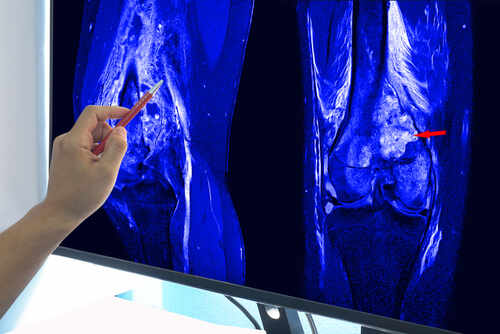
Genicular Artery Embolization, or GAE, targets the root cause of inflammatory knee pain in a new way. Osteoarthritis causes abnormal small blood vessels to grow into the knee lining. Those vessels feed chronic inflammation. During GAE, an interventional radiologist threads a thin catheter through a small nick in the skin, finds those abnormal vessels using imaging, and blocks them with tiny particles. The inflammation loses its fuel supply. Pain drops. The whole procedure takes about an hour.
What the Clinical Data Actually Shows
The results from published research are hard to dismiss. A prospective single-arm trial reported 100% technical success — meaning the procedure worked as planned every single time. [1] Pain scores dropped 48.5% at one month, 50.8% at three months, and 55.4% at twelve months, all with strong statistical significance. [1] A separate systematic review covering nine studies and 270 patients found that 78% of patients hit the threshold for meaningful pain relief and 92% hit it for improved function. [3]
The durability numbers are also encouraging. One clinical analysis found that only 5.2% of GAE patients needed a knee replacement within two years. [4] Serious complications are rare. A meta-analysis of 339 knees reported that only 2% of patients needed medication for side effects and fewer than 0.3% required hospitalization. [3] The most common nuisance is skin discoloration, which shows up in roughly half of patients — minor, but worth knowing before you decide. [2]
Where the Evidence Gets Complicated
The honest read of the data is more mixed than the headlines suggest. Clinical success rates across studies swing wildly — from 30% to 100% — depending on how researchers defined success and how long they followed patients. [12] One 40-patient cohort showed a clinical failure rate of 32.5% at twelve months. [8] That means nearly one in three patients did not get meaningful relief. No long-term data beyond two years exists yet, so nobody knows how well GAE holds up at year four or five.
GAE also does not work for everyone. Doctors are clear that it is not effective for non-inflammatory knee conditions. [6] Randomized trials in mild to moderate osteoarthritis have shown mixed results, making GAE most appropriate for moderate to severe cases where surgery is on the table but the patient wants to avoid it. [4] The procedure does not cure arthritis or regrow cartilage. It manages pain. That distinction matters enormously when setting expectations.
Why Your Doctor May Not Have Mentioned It
The American Academy of Orthopedic Surgeons and the American College of Rheumatology currently recommend genicular nerve ablation over GAE, citing a larger base of randomized trial evidence. GAE lacks that same level of guideline endorsement, which shapes what specialists suggest in the exam room. No head-to-head trial comparing the two procedures exists yet. [4] That gap in the evidence is a real problem — not a conspiracy, just how slow institutional medicine moves when a newer procedure challenges the standard of care.
Cost is less of a barrier than most patients assume. GAE is covered by Medicare, Blue Cross, and United Healthcare, though eligibility requires verification after a consultation. [4] A cost-effectiveness analysis using randomized trial data found GAE more cost-effective than radiofrequency ablation, with a 41.6% to 54.8% probability of being the better economic choice compared to 18.4% to 29.2% for its competitor. [5] For a patient staring down a $30,000 knee replacement and months of rehab, that math deserves a serious look.
The Bottom Line for Patients Who Are Running Out of Options
GAE is not a miracle. It will not work for every knee or every patient. The evidence base is still maturing, and the long-term picture past two years remains unclear. But for someone with moderate to severe inflammatory knee osteoarthritis who has tried the standard options and wants to delay or avoid surgery, the data is strong enough to warrant a real conversation with an interventional radiologist. The procedure is safe, covered by major insurers, and backed by peer-reviewed research. The only question is whether your current doctor knows to mention it.
Sources:
[1] Web – This emerging treatment is helping people avoid knee replacement …
[2] Web – A Prospective Single-Arm Trial of Genicular Artery Embolization for …
[3] Web – Genicular Artery Embolization: Building Evidence and Practice
[4] Web – Genicular artery embolization for treatment of knee osteoarthritis …
[5] Web – Genicular Artery Embolization: A Minimally Invasive Approach to …
[6] Web – A Cost-Effectiveness Analysis Using Randomized Clinical Trial Data
[8] Web – Genicular artery embolization for knee osteoarthritis
[12] Web – What Is the Success Rate of Genicular Artery Embolization?