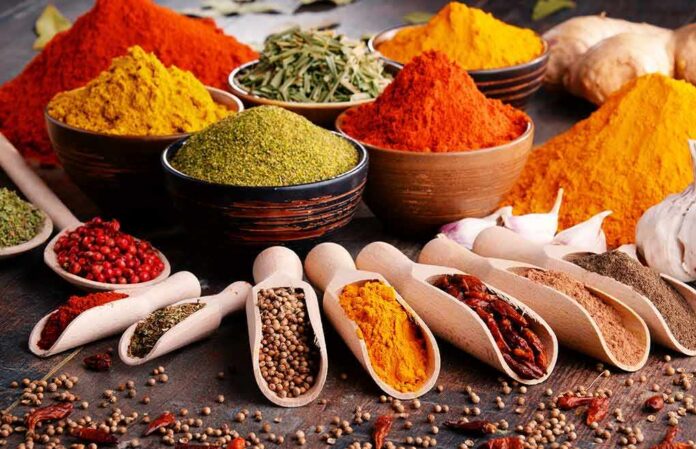
The spices sitting in your kitchen cabinet right now may be doing more than flavoring dinner, they may be shaping the trillions of bacteria living in your gut.
Story Snapshot
- A randomized, controlled-feeding study of 54 adults found that adding herbs and spices to meals changed gut bacteria after just four weeks.
- Higher spice amounts were linked to more bacteria that produce short-chain fatty acids, compounds tied to gut and metabolic health.
- Researchers tested blends with cinnamon, ginger, turmeric, cumin, rosemary, oregano, basil, and thyme at three different daily doses.
- Scientists caution that early microbiome changes do not yet prove long-term health benefits, since the field still lacks agreed standards for what counts as a “healthy” gut.
What The Study Actually Found
Researchers at Penn State ran a crossover study published in the Journal of Nutrition, testing three spice levels on the same group of adults at risk for heart disease. Participants ate controlled diets containing 0.5, 3.3, or 6.6 grams of mixed herbs and spices per 2,100 calories. After each four-week period, stool samples showed measurable shifts in gut bacteria compared to baseline, with the biggest changes at the highest spice dose.
The spice blends included kitchen staples most people already own: cinnamon, ginger, cumin, turmeric, rosemary, oregano, basil, and thyme. Researchers chose these because they appear often in everyday cooking, not because they are exotic superfoods. The point was to test whether realistic amounts, not supplement-sized doses, could shift gut bacteria in a measurable way.
Why Short-Chain Fatty Acids Matter
The study found that higher spice intake boosted bacteria known to produce short-chain fatty acids. These compounds feed the cells lining the colon, help regulate inflammation, and may influence how the body manages blood sugar. Specific bacteria like Agathobacter and Faecalibacterium increased after the high-spice diet compared to lower doses, according to the detailed lab results.
Gut bacteria also play a role in producing GLP-1, a hormone made in the intestine that signals fullness to the brain and helps regulate blood sugar after meals. Some researchers now wonder whether certain foods, including spices, could support this natural pathway without drugs. Early evidence suggests spices may play a supporting role in appetite control and blood sugar balance.
Separate Research Points To Curcumin
A different line of research looked at curcumin, the active compound in turmeric, in people with prediabetes. A nine-month trial found that curcumin supplementation significantly lowered the number of participants who went on to develop type 2 diabetes. That result stands apart from the spice-blend study but adds to a growing body of work suggesting specific compounds in common spices may influence blood sugar control through mechanisms beyond taste alone.
Keeping The Excitement In Perspective
Scientists studying the gut microbiome broadly agree the field is still young. Many findings show associations between bacteria and health outcomes, but struggle to prove direct cause and effect. Experts point out there is still no universally accepted definition of what makes a gut microbiome “healthy,” which makes it hard to say exactly what a positive change should look like.
An international panel of microbiome experts has stated plainly that gut bacteria are clearly linked to human health, even as clinical use of that knowledge remains limited. The panel noted that complexity in the microbiota, combined with difficulty separating correlation from causation, slows the path from lab finding to doctor’s recommendation.
That gap between promising signal and medical certainty is common in nutrition science. It does not erase the Penn State findings. It simply means the spice-blend study should be read as a solid early step, not a finished verdict. A 54-person, four-week trial is a meaningful start, but larger and longer studies would help confirm whether the bacterial shifts translate into real, lasting health benefits.
A Reasonable Takeaway For Dinner Tonight
None of this requires an expensive supplement stack or a trip to a specialty store. The spices tested already sit in most American pantries, and the amounts used in the study, a teaspoon to a few teaspoons daily, fit easily into ordinary cooking. For readers skeptical of pricey probiotic trends, this research offers a common-sense, low-cost option grounded in real data rather than marketing hype.
If you have gut issues, you do not have to go straight into buying $340 worth of probiotics or fancy prebiotics.
Believe it or not, there are certain relatively cheap, easily accessible and safe spices that you can try adding to your meals that can offer meaningful support for… pic.twitter.com/8ZZQeWqso9
— George Ferman (@Helios_Movement) November 20, 2026
Adding a heavier hand of cinnamon, turmeric, cumin, or rosemary to home-cooked meals costs little and carries minimal downside for most healthy adults. Given the current science, it looks like a sensible habit worth keeping, paired with realistic expectations about what one dietary change can and cannot accomplish for gut and metabolic health.
Sources:
psu.edu, ncbi.nlm.nih.gov, mindbodygreen.com, pmc.ncbi.nlm.nih.gov, pubmed.ncbi.nlm.nih.gov, gut.bmj.com