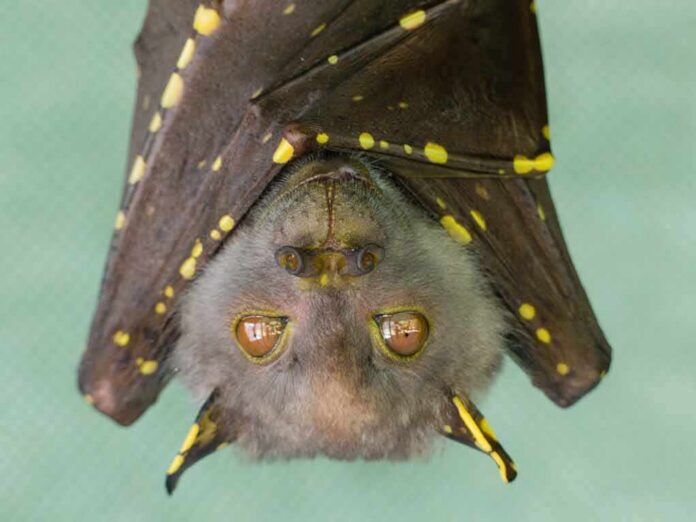
Bats carry some of the deadliest viruses on the planet, from rabies to strains related to Ebola, yet they rarely get sick from them, and scientists say they may finally know a key reason why.
Quick Take
- Researchers found bats in the vesper family carry two separate copies of the gene system that builds antibodies, something no other known mammal has.
- The study, published in Science Advances, confirmed the duplication works at the functional level in the big brown bat, not just on paper.
- The finding may help explain how bats survive infections that are often fatal to humans and other mammals.
- Scientists caution this is one piece of a much larger puzzle behind bats’ unusual disease resistance.
A Second Set of Antibody Genes Nobody Expected
Every mammal studied before this, including humans, mice, and dogs, carries one copy of the immunoglobulin heavy-chain locus. That’s the stretch of DNA responsible for building antibodies, the proteins that lock onto viruses and mark them for destruction. Researchers scanning 26 bat species found something different. Vesper bats, the largest bat family on Earth, carry two full copies of this gene system, sitting on separate chromosomes.
The team didn’t stop at spotting the duplication in raw DNA. They studied the big brown bat, Eptesicus fuscus, as a model species and used single-cell analysis to prove both gene copies actually get used to build working antibodies. That distinction matters. A duplicated gene that sits dormant tells you little. A duplicated gene that’s active and producing real proteins tells you the bat’s immune system runs on a completely different blueprint than ours.
Why Two Copies Could Mean a Stronger Shield
Antibody diversity is the immune system’s insurance policy. More gene material to draw from generally means more ways to recognize and respond to new invaders. Scientists studying the discovery say having two independent, functional loci gives vesper bats a wider menu of antibody shapes to deploy against unfamiliar viruses. That extra flexibility could explain why bats often host pathogens without the severe inflammation that makes humans so sick.
The comparison researchers keep reaching for is fish. Some teleost fish species also carry duplicated immune loci, though the setup in bats evolved independently and looks structurally distinct. Finding this kind of arrangement in a mammal at all surprised the research team, since duplicated antibody systems were considered rare outside of much older evolutionary lineages.
Part of a Bigger Pattern in Bat Immune Evolution
This is not the first strange immune trait scientists have found in bats. Earlier work identified duplicated antiviral genes like APOBEC3 and tetherin, along with rapid evolution in interferon-related genes that help cells detect invaders early. Bats also show unusually high rates of positive selection across their immune genes compared to other mammal groups studied in the same way.
Taken together, these findings paint bats as animals whose immune systems have been reshaped again and again by evolutionary pressure, likely tied to their unique biology. Bats fly, which raises body temperature and metabolic stress in ways that mimic fever, and some researchers think this may have pushed their immune systems toward tolerance rather than all-out inflammatory attack. The new antibody-gene duplication adds one more piece to that picture.
What This Means, and What It Doesn’t Yet
Scientists are careful to frame this as a structural and functional discovery, not a full explanation for why bats survive deadly outbreaks unharmed. The duplicated antibody genes show bats have more raw material to build immune responses from, but researchers have not yet mapped exactly how that translates into surviving specific infections like rabies or coronaviruses. That link is the next step for future studies.
Still, the discovery gives virologists and immunologists a concrete new lead after years of studying bats mostly from the outside, tracking which viruses they carry rather than how their bodies tolerate them. Understanding the genetic hardware behind that tolerance could eventually inform how scientists think about immune resilience in general, including in humans facing chronic viral threats.
Sources:
sciencedaily.com, thehindu.com, pmc.ncbi.nlm.nih.gov, biorxiv.org, english.pravda.ru