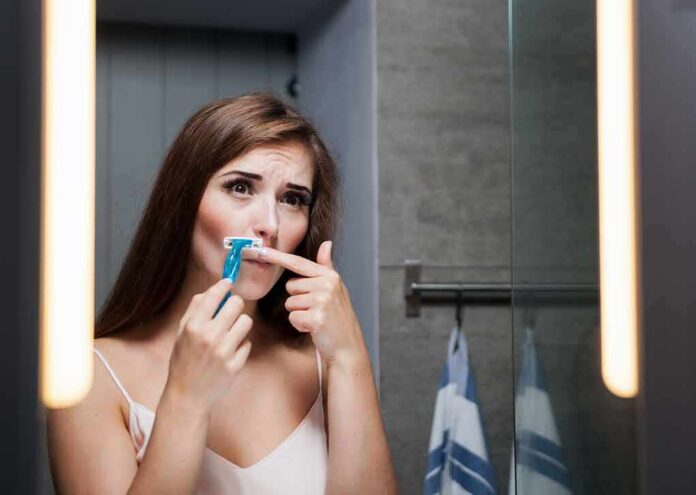
A five-minute video lit up a big question millions whisper about: why chin hairs show up and what to do, naturally.
Story Snapshot
- Dr. Janine Bowring shares eight natural tips to address facial hair in women.
- Androgens, insulin sensitivity, age, and genetics can shape hair growth.
- Clinical guidance for polycystic ovary syndrome backs lifestyle steps and targeted care.
- Spearmint tea shows short-term anti-androgen effects; hair changes need longer study.
What Dr. Janine said and why it caught fire
Dr. Janine Bowring’s video, Why You Have Facial Hair and How to Stop It Naturally, lays out a fast list of causes and fixes. She points to androgens, insulin sensitivity, genetics, age, and hormonal shifts. She suggests steps like two cups of spearmint tea a day, nutrient support, omega-3 fats, sun exposure, and detox practices. The focus is simple: support hormones and metabolism to calm unwanted hair growth. Viewers get an eight-step plan in under six minutes.
Her framing links facial hair in women to metabolic patterns seen in polycystic ovary syndrome. That focus matches parts of modern guidance. The 2023 international guideline for polycystic ovary syndrome says healthy eating and activity help general and metabolic health. It ties central fat, blood fats, and insulin to better outcomes. It also states that hirsutism can point to higher androgens and to polycystic ovary syndrome in adults. The lifestyle lane is not fluff; it is a pillar of care.
Where natural tips meet clinical guidance
Two cups of spearmint tea per day mirrors a clinical trial. In that 30-day study, women who drank spearmint tea had lower free and total testosterone and felt less bothered by hair. The objective hair score did not change much in the short window. The design was randomized with a placebo tea and two daily servings. The biochemistry moved in the right direction. Real hair change likely needs more time, or added tools.
Inositol sits in a gray zone. The 2023 guideline allows inositol if a person prefers it, since it may modestly help hormones and some metabolic measures. It also says the evidence for clear hair reduction is limited and does not support a set type or dose yet. That is a permission slip, not a gold star. Common sense says do not hang your hopes on a powder without a plan and timeline.
What to try now, and what to verify first
Start by naming the problem. A clinical visit can check for signs of androgen excess. A history and exam can look for medicines, menopause shifts, or thyroid, adrenal, or ovarian causes. Lab work can measure total and free testosterone and other markers. The guideline treats this as standard care. Do not assume every case comes from the same cause or needs the same fix. A clear start line saves time and money.
Build the base. Eat whole foods, cut ultra-processed carbs, move daily, and sleep on a set schedule. These steps support insulin and weight control, which often helps polycystic ovary syndrome. They also stack well with any next steps. Add spearmint tea twice a day if you wish, and give it several months. Consider omega-3 fats from fish or quality supplements. Check vitamin and mineral status with your clinician if a lack is likely. Keep it simple, steady, and track changes.
When to add medical tools for faster results
Cosmetic tools are not the enemy. The guideline supports mechanical laser and light therapies for facial hair. These options can speed visible results while lifestyle work runs in the background. For those with polycystic ovary syndrome and insulin issues, clinicians may consider metformin. The guideline favors metformin over inositol for hirsutism and central fat in the right cases. That is a practical path when hair growth is stubborn or distressing.
2 Facial Clues of B12 Deficiency Most People Miss
Could your face be revealing a hidden vitamin deficiency? In this video, Dr. Janine reveals 2 facial clues of vitamin B12 deficiency that most people miss. pic.twitter.com/w0a7TLkXhE
— Dr. Janine Bowring, ND (@doctorjanineND) October 29, 2026
Set honest expectations. Natural steps can help hormones and health. Some also show promise for hair. But hair cycles take months. Blend quick wins, like laser, with deeper work, like diet and movement. Keep a photo log and simple scores so you see progress, not just hope. If new hair surges fast or other symptoms appear, see your clinician at once. A short video can spark action, but your plan should be built on your body’s data, not guesses.
Sources:
youtube.com, onlinelibrary.wiley.com, academic.oup.com, pmc.ncbi.nlm.nih.gov