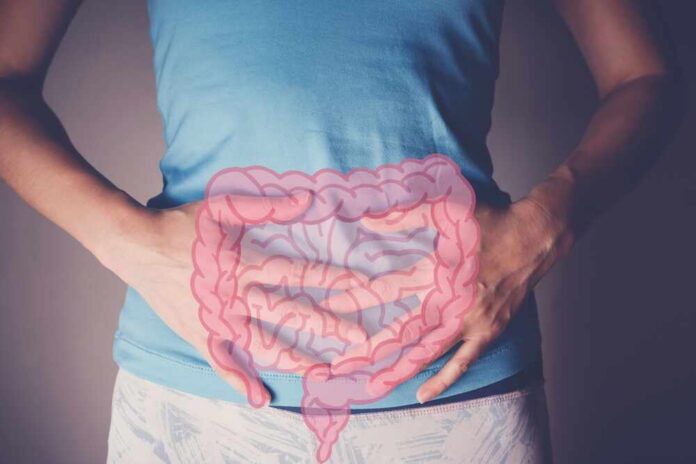
Your roommate might be doing more than eating your leftovers—they’re literally reshaping the bacterial universe inside your gut.
Story Snapshot
- Cohabitating with friends or family leads to sharing approximately 12% of gut microbiome species through proximity and daily interactions
- A groundbreaking study of 2,000 Honduran villagers published in Nature revealed social relationships influence gut microbes independent of diet or environment
- Mother-child pairs share 34% of gut strains at age three, declining to 15% by age 30, demonstrating lifelong microbial connections
- Wisconsin Longitudinal Study found cohabiting couples show greater gut microbiome diversity than people living alone
- Trust-based interactions predict microbial sharing more strongly than casual encounters, with effects extending even to friends-of-friends
The Invisible Exchange Happening in Your Home
Science has uncovered something remarkable about the people you share space with: they’re quietly colonizing your digestive system with their microbes. Researchers studying nearly 2,000 people across 18 Honduran villages discovered that friends and housemates exchange gut bacteria through face-to-face contact and shared meals. The exchange happens regardless of whether people eat identical foods or drink from the same water sources. Social proximity alone drives this microbial swapping, challenging decades of assumptions that diet reigned supreme in shaping our internal ecosystems. The implications reach far beyond quirky biological trivia into fundamental questions about health, immunity, and disease prevention.
From Primates to People: Tracing the Science
The journey to understanding social microbiome transmission began not with humans but with baboons and other primates in the 2010s. Researchers observed that isolated animals showed drastically reduced gut diversity compared to their socially integrated counterparts. Close primate partners developed remarkably similar microbial communities simply through proximity. The 2019 Wisconsin Longitudinal Study brought this phenomenon into human focus, analyzing 60 years of data to prove that family and friend interactions correlated with fecal microbiota patterns even when controlling for dietary variables. These earlier animal models predicted what scientists would eventually confirm in human populations living traditional lifestyles.
The Honduran Villages That Changed Everything
The Honduras research published in Nature represents the gold standard for isolating social effects on gut health. Scientists chose these 18 villages specifically because residents consumed traditional diets with minimal medication use, eliminating confounding variables that plague urban microbiome studies. The results were unequivocal: trust-based relationships predicted microbial sharing patterns more accurately than any other factor measured. The sharing occurred not just between direct contacts but rippled outward to friends-of-friends, creating what researchers describe as “microbial social networks.” Cohabitants shared roughly 12% of gut species while oral microbiome sharing jumped to 32%, demonstrating that different body sites respond uniquely to social exposure.
The Intimacy Gradient of Bacterial Exchange
Not all relationships create equal microbial exchange. Mothers and young children share the strongest connection, with 34% of gut strains matching at age three. This percentage drops to 15% by age 30 as children develop independent microbial identities through their own social networks. Spouses and siblings show intermediate sharing levels, while roommates and neighbors demonstrate measurable but lower exchanges. The Wisconsin study revealed something counterintuitive: gregarious people with numerous social contacts showed less microbial similarity per individual relationship, suggesting that breadth of social connection dilutes the intensity of microbial exchange. Quality of interaction trumps quantity every time.
Why Diversity Matters for Your Health
Gut microbiome diversity functions as a biological insurance policy. People living alone consistently show lower microbial diversity than cohabitants, potentially leaving them vulnerable to digestive disorders, weakened immunity, and even mental health challenges. The microbiome influences everything from nutrient absorption to neurotransmitter production, meaning the bacteria you share with housemates could affect your mood, energy levels, and disease resistance. Isolation creates biological consequences that extend beyond loneliness into measurable physiological deficits. The elderly and singles face particular risks from reduced microbial diversity, a concern that gained new urgency during pandemic lockdowns when social isolation became widespread.
The Questions Scientists Still Need to Answer
The Honduran and Wisconsin studies broke new ground, but significant uncertainties remain. Researchers conducted these investigations in relatively isolated or traditional settings, leaving urban populations largely unstudied. Whether apartment dwellers in New York or London show identical sharing patterns remains unknown. The studies also cannot yet determine whether shared microbes represent beneficial exchanges or potential pathogen transmission. Scientists note the gregarious dilution effect requires further validation, and the mechanisms behind friends-of-friends sharing remain speculative. These first-of-their-kind findings demand replication across diverse populations and geographic settings before becoming settled science.
What This Means for Your Daily Life
The practical implications of social microbiome science extend from individual health decisions to public policy considerations. The research suggests that community living arrangements might offer health advantages beyond companionship and cost-sharing. It normalizes the reality that sharing space means sharing microscopic life, potentially reducing stigma around ordinary household bacterial exchange. The microbiome testing and probiotic industries have already begun integrating social factors into their products, with nutrition apps personalizing recommendations based on household composition. Public health officials now face questions about whether isolation-related dysbiosis deserves attention alongside traditional loneliness interventions, especially for aging populations.
The microbial world operates by different rules than we imagined. Your gut contains trillions of bacteria, and the research proves that who you live with matters as much as what you eat in determining which species thrive inside you. The implications ripple outward from personal health choices to how we structure communities and care for isolated populations. As scientists continue validating these findings across different cultures and settings, one thing seems certain: the people in your life shape you in ways far more literal than anyone previously understood.
Sources:
How Your Friends Shape Your Gut Microbiome
Your Friends Might Be Influencing Your Gut Microbiome Study Finds
Social relationships and the human microbiota
My Family, My Roommates, My Neighbors and My Microbiota
Family Friends Shape Your Microbiome
Living With Roommates Might Be Changing Your Gut Microbiome Without You Knowing
Living With Friends Quietly Altering Gut Bacteria