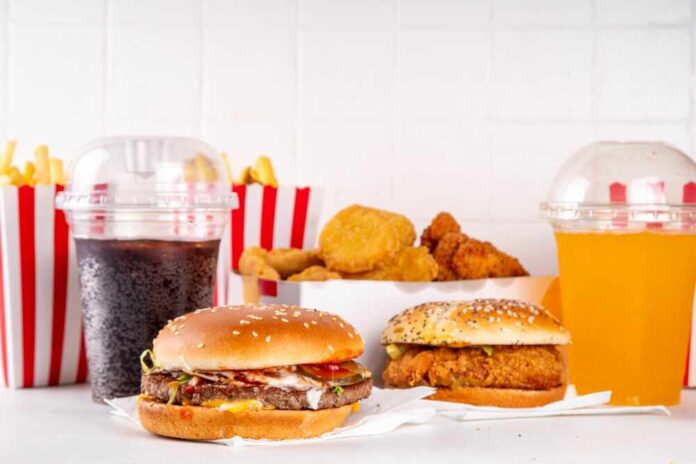
Ultra-processed foods marketed as convenient staples are silently marbling your thigh muscles with fat, sabotaging strength and inviting knee osteoarthritis before you feel a thing.
Story Snapshot
- Higher ultra-processed food (UPF) intake links directly to fat streaks replacing thigh muscle fibers, visible on MRI scans.
- This muscle degradation happens independently of calories, weight, exercise, or demographics, prioritizing diet quality.
- Thigh muscles like quadriceps weaken, heightening knee osteoarthritis risk in aging adults.
- Study from Osteoarthritis Initiative data marks first MRI quantification of UPF effects on muscle fat.
- Researchers call for trials to test if cutting UPFs reverses this hidden damage.
Study Reveals UPFs Infiltrate Thigh Muscles
Zehra Akkaya from Ankara University and UCSF led the cross-sectional analysis using Osteoarthritis Initiative data collected from 2004 to 2015. Participants reported 12-month diets via 102-item surveys classified by the NOVA system. Researchers measured intramuscular fat in thigh muscles with MRI scans across 15 slices per thigh, scoring via Goutallier system from 0 (normal) to 4 (severe infiltration). Higher UPF percentage in diets correlated with elevated scores, showing fat streaks mimicking marbled steak.
UPFs include sugary drinks, packaged snacks, frozen pizzas, cereals high in salt, sugar, fat, and additives. These products dominate US adult diets at over 50% of calories. The study adjusted for confounders like body weight, physical activity, and sociodemographics; the link persisted. Quadriceps fat reduces muscle strength, mimicking sarcopenia and stressing knees critical for mobility in osteoarthritis-prone adults.
Research Methods Establish Independent Link
Osteoarthritis Initiative enrolled 4,796 at-risk participants in 2004. Dietary data from February 2004 to October 2015 enabled retrospective UPF analysis. Goutallier grading quantified fat replacing muscle fibers. Results published April 14, 2026, in Radiology by Radiological Society of North America. Senior author Thomas M. Link and collaborators including Gabby B. Joseph, Katharina Ziegeler, and Nancy E. Lane confirmed association strength. Waist circumference outperformed BMI as risk predictor.
No prior study tied UPFs directly to thigh muscle fat via MRI. Previous research linked UPFs to visceral fat and metabolic syndrome, but muscle infiltration appeared mainly in aging or obesity.
Researchers Stress Hypothesis-Generating Findings
Lead authors describe results as hypothesis-generating due to cross-sectional design, urging longitudinal trials and interventions testing UPF reduction against MRI biomarkers. Effects hit men and women equally. UPF consumption has risen since 2015 data, likely underestimating current risks. Academic collaborators from UCSF and Ankara University maintain no industry ties, prioritizing joint health prevention through modifiable diets.
RSNA promotes MRI for muscle fat assessment. Uniform expert agreement holds on the association, with caveats on causality. Peer-reviewed in Radiology, methods prove reproducible. No contradictions emerged across sources.
Implications Demand Dietary Shift
Short-term, findings spur awareness and swaps to whole foods plus strength training. Long-term, causal proof could avert osteoarthritis in millions, cut muscle weakness, and validate MRI for diet monitoring. Aging and overweight US consumers face highest stakes. Healthcare savings loom from fewer joint replacements; social momentum builds for food labeling and education. Policy eyes UPF regulation, challenging processed giants while elevating whole-food research and radiology roles.
Sources:
Ultra-processed foods linked to fatty muscle changes and higher health risks, study finds
Ultra-processed food intake associated with decline in muscles
RSNA: Ultra-processed foods linked to muscle fat infiltration
MRI highlights worse muscle health from ultra-processed foods
Related Radiology study on muscle imaging
Ultra-processed foods may degrade muscle health, new MRI findings suggest