Every time your dog shreds a cheap plastic toy in under ten minutes, that colorful chunk of petroleum-based nothing heads straight to a landfill — and a small company in Bozeman, Montana decided that was a problem worth solving from the ground up.
Story Snapshot
- West Paw, a family-owned Bozeman manufacturer, builds dog toys from recycled ocean-bound plastic and its own recyclable material called Zogoflex, sold in more than 3,500 retailers nationwide.
- The company claims it has kept over 16 million plastic bottles out of landfills through recycling and take-back programs — though those figures come from its own reporting, not independent audits.
- Federal law sets zero safety or labeling standards for pet toys, meaning any brand can call its product “eco-friendly” with no regulatory consequence.
- West Paw’s toys were awarded to Best in Breed winners at the 150th Westminster Dog Show, signaling mainstream market acceptance of the durable-toy category.
The Plastic Toy Problem No One Is Counting
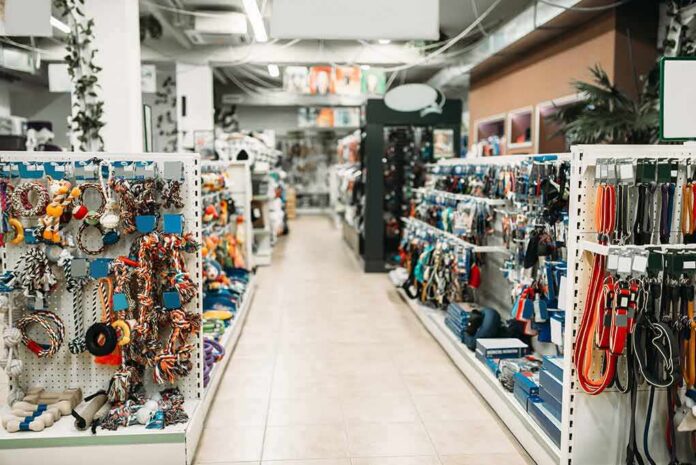
Walk through any big-box pet aisle and you will find dozens of brightly colored plastic toys priced under five dollars. Most dogs destroy them within days. The fragments go in the trash, the owner buys another, and the cycle repeats. Nobody has formally measured how much of the municipal plastic waste stream comes from pet toys specifically, which means the scale of the problem is real but unquantified. That evidence gap matters, because it makes both the problem and the solution harder to hold anyone accountable for.
What is clear is that the conventional pet toy market operates in a near-total regulatory vacuum. There are no federal standards for pet toys, and pet companies face no manufacturing or marketing rules comparable to those governing children’s toys. [5] A dog owner whose pet swallowed a fragment of a toy marketed as “indestructible” discovered this the hard way — the incident raised public questions about oversight, and the answer from regulators was essentially that none existed. That structural gap is the environment in which every sustainability claim, good or bad, currently lives.
What West Paw Is Actually Building in Montana
West Paw operates out of Bozeman and a second factory in Columbia Falls, Montana, manufacturing dog toys, beds, leashes, and collars. [3] The company holds Certified B Corporation status, a third-party designation requiring verified social and environmental performance standards. Its signature toy material, Zogoflex, is marketed as recyclable, and a newer product line called Seaflex is described as a blend of recycled ocean-bound plastic and zero-waste Zogoflex. [1][3] Those toys reached a high-visibility audience when West Paw provided custom versions to every Best in Breed winner at the 150th Westminster Dog Show. [2]
The company runs a take-back program called Join the Loop, through which customers mail in worn Zogoflex toys to be sanitized and recycled rather than discarded. West Paw claims this effort, combined with its manufacturing choices, has kept over 16 million plastic bottles out of landfills. [4] That number is striking if accurate. The honest caveat is that it comes from the company’s own blog, not from a third-party processor audit or independent lifecycle assessment.
Where the Eco-Friendly Narrative Gets Complicated
Recycled plastic is still plastic. West Paw’s own materials acknowledge that recycled plastics can contain toxic chemicals, and the toys remain synthetic products that require energy to manufacture and ship to 3,500 retail locations across the country. [6] A product made from ocean-bound plastic is meaningfully better than one made from virgin resin, but “better” is not the same as “solved.” Without a full lifecycle assessment covering raw materials, manufacturing energy, shipping, and actual end-of-life disposal rates, the net environmental benefit is a reasonable inference, not a demonstrated fact.
There is also a substitution question that no available data answers: are buyers of West Paw products people who would otherwise have purchased disposable plastic toys, or are they a premium-oriented segment adding another product to their collection? If it is the latter, the environmental benefit is smaller than the marketing suggests. That is not a reason to dismiss what West Paw is doing — a durable, take-back-eligible toy made partly from ocean-recovered plastic is a genuinely better design choice than a single-use alternative. But durable design and circular marketing language are not the same thing as a closed loop, and consumers over 40 who have watched “green” become a branding strategy across every consumer category know the difference between a company trying to solve a problem and a company trying to own a story. West Paw appears to be doing more of the former than most, which is worth saying plainly — and worth watching closely.
Sources:
[1] Web – Your Dog’s Toy Is a Plastic Problem — This Montana Company Is Fixing …
[2] Web – West Paw Announces Exclusive Product Bundle for Sam’s Club …
[3] YouTube – Montana company’s dog toys awarded to Westminster …
[4] Web – Treat Your Furry Friend with West Paw’s Made in USA Pet Toys
[5] Web – Count The Ways West Paw Reduces Our Carbon Paw Print
[6] Web – Broken toy that sickened beloved dog raises questions about …