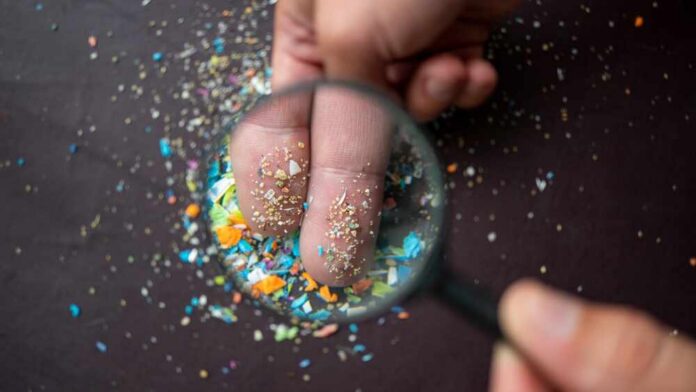
Tiny plastic particles from your water bottle may be sitting in your lungs right now, quietly rewiring your immune system in ways science is only beginning to understand.
Quick Take
- A 2026 Medical University of Vienna study found polyethylene terephthalate microplastics stayed in mouse lungs for at least 14 days after a single exposure, triggering immune cell activity linked to allergic reactions.
- When microplastics combined with ragweed pollen in the same study, respiratory inflammation got worse, raising serious questions for the nearly 81 million Americans who suffer from allergies.
- Separate research presented at the 2025 American Thoracic Society International Conference found that inhaled microplastics crippled the lungs’ key cleanup cells within just 24 hours.
- The hard truth: all the strongest findings come from animal studies, and no major health agency has issued respiratory safety guidelines for microplastic exposure.
What Researchers Found Hiding in Mouse Lungs
Scientists at the Medical University of Vienna gave mice a single dose of polyethylene terephthalate microplastics through the respiratory tract. Polyethylene terephthalate, the plastic used to make most water bottles and food packaging, did not clear quickly. The particles were still detectable in the lungs 14 days later. During that window, the immune system responded. Lymphocytes and eosinophils, the exact immune cells that spike during allergic reactions, flooded the lung tissue. [1]
The combination experiment is where things get more alarming. When researchers paired the plastic particles with ragweed pollen, a common seasonal allergen, respiratory inflammation grew worse than with either trigger alone. The study also tested what happened when microplastics were introduced alongside other allergens through the abdominal cavity. The result was an altered immune response and a changed antibody reaction to the allergen. [1] In plain terms, the plastic appeared to amplify the body’s reaction to things it was already fighting.
Your Lungs’ Cleanup Crew Gets Disabled Fast
Independent research presented at the 2025 American Thoracic Society International Conference added another layer of concern. Macrophages are the immune cells that patrol your lungs, surrounding and destroying bacteria and debris. Within 24 hours of exposure to microplastics of any size, those macrophages lost a significant portion of their ability to do that job. The researchers also tracked where the particles went after inhalation. Microplastics showed up in the liver, spleen, and colon within a week, with trace amounts reaching the brain and kidneys. [2]
Think about what that means. You breathe in plastic particles, and within a single day, the cells responsible for protecting your lungs from infection are already compromised. The particles do not stay put. They travel. Whether that translates into measurable disease in humans is still an open question, but the biological mechanism being revealed in these studies is not trivial.
The Animal Study Problem Is Real, But It Is Not a Dismissal
The lead researcher on the Vienna study, Michelle Epstein, was direct about the limits of the work. The results came from mouse models and cannot be applied directly to human exposure. [1] That is honest science, and it matters. No controlled human study has confirmed that inhaled polyethylene terephthalate particles persist in human lungs for 14 days or that they produce the same immune disruption seen in mice. The National Institute for Occupational Safety and Health has not set a recommended exposure limit for microplastics because the human data is still too thin to draw firm lines. [8]
But here is the historical context that makes dismissal equally irresponsible. Asbestos, lead, and endocrine-disrupting chemicals all followed the same early arc: clear animal data, contested human evidence, regulatory delay measured in decades, and then a wave of preventable harm. Roughly 67% of published microplastic studies frame the risks as hypothetical or uncertain, while only 24% call them established. [17] That ratio is normal for an emerging field. It is not a reason to wait 30 years before asking serious questions. A large-scale review from researchers at the University of California, San Francisco, concluded that microplastic exposure is “suspected” to harm respiratory health, with moderate-quality evidence supporting that finding. [11]
What Nobody Is Doing Yet, and Why That Should Bother You
The World Health Organization, the Centers for Disease Control and Prevention, and the Environmental Protection Agency have not issued a single formal guideline on microplastic inhalation risks. There is no recommended limit. There is no public warning. A clinical trial registered under the identifier NCT06603675 is studying microplastics in the human respiratory system, but results are not yet available. [7] The science is moving. The institutions are not keeping pace. That gap is where people get hurt, and history has shown it more than once.
The evidence is not settled, but it is serious enough to demand faster answers. If plastic particles can stay in a lung for two weeks, disable immune cells within a day, and amplify the body’s reaction to pollen, then every allergy sufferer, every parent of an asthmatic child, and every person breathing outdoor air deserves to know how that story ends in humans, not just in mice.
Sources:
[1] Web – The Surprising Way Microplastics May Influence Inflammation & …
[2] Web – PET microplastics remain in lungs and worsen respiratory tract …
[7] Web – New research shows inhaled microplastics can reach deep into the …
[8] Web – Microplastics Pose Risks to Lungs – Medscape
[11] Web – Microplastics and human health – Wikipedia
[17] Web – Microplastics and our health: What the science says