The brain foods that matter most for a two-year-old are not the same ones that matter most for a seventy-year-old, according to a new review that tracked nutrition research across every stage of life.
Story Snapshot
- A review of 54 studies found brain-boosting foods shift depending on age and life stage.
- Animal-derived foods showed up as especially important during the first 1,000 days of life.
- Leafy greens, nuts, berries, and fish were tied to healthier brain aging in older adults.
- Government health guidance backs similar patterns, like the Mediterranean and MIND diets, for aging brains.
A Review Built Around Life Stages, Not One-Size-Fits-All Advice
Researchers screened a wide pool of nutrition studies and narrowed it down to 54 that met their standards. Eight were broad concept papers. The other 46 looked at specific foods and their effects on the brain. The team organized findings by life stage: the first 1,000 days, school age, adolescence, adulthood, and older adulthood.
That structure matters. A baby’s brain is building itself from scratch. An older adult’s brain is trying to hold onto what it already built. Treating both groups the same, nutritionally, ignores how differently a growing brain and an aging brain actually work.
During the first 1,000 days of life, the review found animal-derived foods carried extra weight. That window covers pregnancy through a child’s second birthday, a period packed with rapid brain growth. The nutrients found in these foods support that construction phase in ways plant foods alone often cannot match at this stage.
What Shifts Once Adulthood And Aging Begin
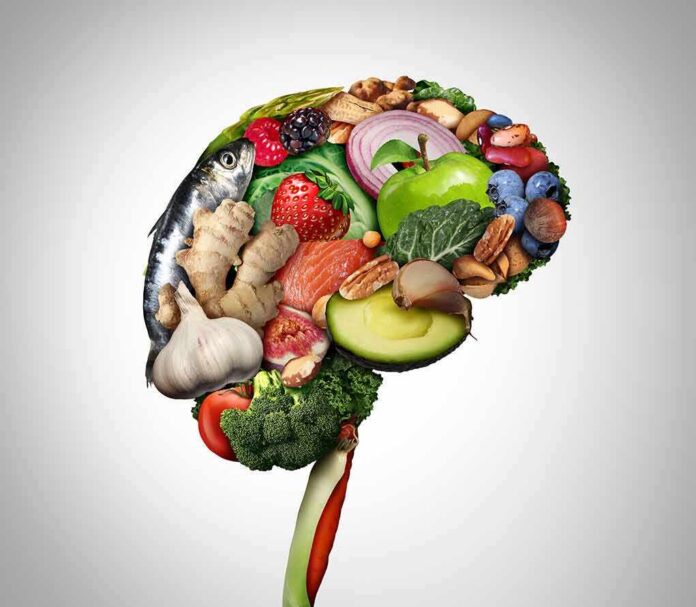
Among older adults, the picture changes. The review pointed to leafy greens, nuts, and other plant-based staples, along with berries and fish, as the standout foods tied to healthier cognitive aging. That lines up with decades of nutrition research built around whole foods rather than supplements or single nutrients.
This fits with what the National Institute on Aging already tells the public. Its guidance points to Mediterranean-style eating, built on fresh produce, whole grains, healthy fats, and more fish than red meat, as a pattern tied to better outcomes in aging research. The overlap between an independent review and a federal health agency is not a coincidence. It reflects a consistent signal across many years of studies.
The MIND diet, a hybrid of Mediterranean and DASH eating styles, pushes this even further by naming specific foods: leafy greens, berries, nuts, beans, whole grains, fish, poultry, and olive oil. A large study of more than 159,000 adults, published in JAMA Neurology, found the DASH diet showed the strongest and most consistent link to slower cognitive decline among six popular eating patterns tested.
Why Food Still Beats Any Single Magic Nutrient
Neurology experts regularly point to berries, fatty fish, and kefir as go-to brain foods, crediting their antioxidants, healthy fats, and probiotics. No single pill replicates that combination. Whole foods deliver nutrients together, the way the body evolved to use them, which may explain why dietary patterns keep outperforming isolated supplements in study after study.
One honest caveat belongs here. Most of this evidence comes from observational studies that track what people already eat, not controlled trials that randomly assign diets. A major MIND diet trial found cognition improved similarly in both the diet group and the control group over three years, a reminder that association is not the same as proof. That does not erase the pattern. It just means confidence should stay grounded in what the data actually shows, not overstated.
For families with young kids, that means prioritizing nutrient-dense animal and plant foods during pregnancy and early childhood. For adults past fifty, it means leaning into leafy greens, nuts, berries, and fish as a long-term habit, not a short-term fix. The common thread across every age group is simple: whole, minimally processed food keeps showing up as the safest bet for a sharper brain, no matter the stage of life.
Sources:
mindbodygreen.com, nia.nih.gov