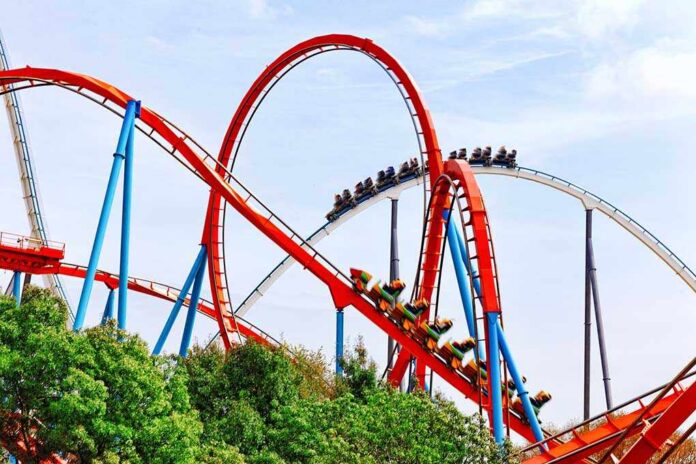
A roller coaster famous for spinning riders upside down at 76 miles an hour is now permanently shut down, after more than 100 people claimed it left them with brain injuries.
Story Snapshot
- Six Flags Magic Mountain permanently retired its X2 roller coaster after nearly 20 years in operation.
- Three new lawsuits accuse Six Flags and manufacturer S&S Worldwide of causing catastrophic brain injuries, including one death.
- Lawyers say more than 100 riders have reported brain injuries linked to the ride over the past two years.
- Six Flags says X2 passed repeated safety tests and closed the ride anyway, calling it “the right thing to do.”
Brain Damage Claims Sink Iconic Coaster
X2 opened in 2002 and quickly became Magic Mountain’s signature attraction. Riders sat in seats that spun freely while the coaster launched them through drops and loops at high speed. The park marketed it as a rite of passage for “the ultimate daredevil.” That reputation is now colliding with a wave of lawsuits claiming the ride’s violent spins caused lasting brain damage in dozens of visitors.
Six Flags Magic Mountain president Brian Oerding announced the closure directly, writing that “while X2 consistently passed a multitude of safety tests, we have decided to close the ride because we believe it’s the right thing to do”. The park had already quietly stopped running X2 back in July, before making the shutdown permanent in late September.
That timing matters. The ride sat idle for two months while lawyers built their case, and the public didn’t learn why until reporters started asking questions. Six Flags never framed the closure as an admission of fault. But shutting down a marquee attraction that supposedly passed every safety check is a strange move for a company that insists nothing is wrong.
What The Lawsuits Actually Allege
Three lawsuits filed in California Superior Court name Six Flags and S&S Worldwide as defendants, accusing them of operating a defectively designed ride and failing to warn riders of the risk. Two of the plaintiffs are women who rode X2 less than a week apart in July and later needed emergency brain surgery. Attorneys say the injuries fit a pattern stretching back years, not an isolated fluke.
Lawyers representing the riders say their client list has grown past 100 people, all alleging some degree of brain injury after riding X2. One earlier case involved 22-year-old Christopher Hawley, who died the day after riding the coaster in 2022 from severe brain bleeding. His family sued and settled with Six Flags for an undisclosed amount. That settlement, quiet as it was, now looks like an early warning sign nobody outside the courtroom noticed.
Six Flags Pushes Back Hard On Causation
Six Flags has not rolled over in court. In earlier X2 litigation, the company denied the ride caused a rider’s fatal brain injury, arguing that testing showed it operated within accepted acceleration limits and that the injury stemmed from a pre-existing condition instead. That is a serious counterclaim, not a dodge, and it deserves weight until a jury sorts it out.
Company filings also argue that a “normal” rider following instructions would not suffer a traumatic brain injury on X2, and that the ride undergoes daily inspections plus regular reviews from third-party and state inspectors. Industry safety reviews cited by ride-safety groups have similarly found that rotational forces on coasters generally pose no proven risk of brain injury to the general public. That is the core tension here: dramatic injuries on one side, disputed engineering conclusions on the other.
Why This Case Is Harder Than It Looks
Amusement park injury cases rarely hinge on whether something bad happened. They hinge on whether lawyers can prove a specific ride motion caused a specific injury, beyond just bad luck or a pre-existing condition. That is a tough scientific hurdle, and Six Flags is leaning on it hard. Still, surgeons who treated two injured riders wrote that their injuries were consistent with “a traumatic rapid acceleration-deceleration event” experienced on X2, a detail plaintiffs will lean on just as hard.
Six Flags Magic Mountain retires X2 roller coaster amid brain injury lawsuits https://t.co/ZfY01FR7be
— Dallas Morning News (@dallasnews) September 30, 2026
A trial date is already set for 2027 in one of the earlier X2 cases, meaning a jury, not a press release, will ultimately decide whether the ride’s design was defective. Until then, Six Flags gets to retire the coaster on its own terms, while insisting the science backs its safety record. Parents weighing family theme park trips this year are watching closely, and rightly so.
Sources:
time.com, sixflags.com, nytimes.com, nbcnews.com, abc7.com, usatoday.com, latimes.com, apnews.com, msn.com