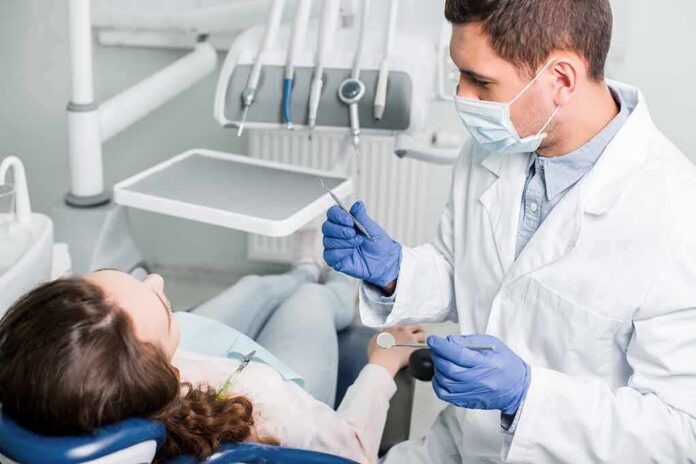
A dentist with 50 years of experience is telling millions of YouTube viewers they can skip the twice-a-year cleaning nearly every other dentist recommends.
Quick Take
- Dr. Ellie Phillips, an Austin-based dentist, says people who control plaque through her home routine may not need professional cleanings at all.
- Major health authorities, including the American Dental Association and MedlinePlus, still recommend cleanings every six months for most adults.
- Phillips claims she has not had her teeth professionally cleaned in 40 years and says her mouth remains healthy.
- Some dental research backs risk-based scheduling over a rigid six-month rule, but that is not the same as skipping cleanings entirely.
A Dentist Breaks From Her Own Profession
Dr. Ellie Phillips spent decades practicing dentistry before deciding the field she trained in oversells routine cleanings. In her video “SKIP Dental Cleanings,” she tells viewers to think about cleanings “in a more practical way” and argues that plaque, not the calendar, should decide when someone sits in the chair. Her logic is simple: no plaque, no cavity risk.
Phillips backs up her claim with her own mouth. A Daily Mail profile reports she has gone 40 years without a professional cleaning and says her teeth remain in excellent shape. She built a five-step home system around that idea, using rinses and xylitol products to strip plaque-forming bacteria before it can build up, arguing that once plaque is gone, the need for a cleaning goes with it.
What The Rest Of Dentistry Still Tells Patients
Every major dental authority still points patients toward regular professional care. The American Dental Association says patients should see a dentist regularly for prevention and treatment, noting that two visits a year add up to roughly two hours in the chair annually, a small trade-off for catching problems early. MedlinePlus goes further, stating plainly that regular cleanings remove plaque buildup that brushing and flossing alone cannot reach.
Cleveland Clinic and the Canadian Dental Association echo the same six-month standard, framing cleanings as routine maintenance rather than optional extras. For people managing diabetes, the American Diabetes Association recommends visits twice a year and says some patients may need cleanings every three months depending on gum health. That guidance reflects a pattern seen across dentistry: risk matters, but the default answer is still “go.”
Where Phillips Draws Her Sharpest Line
Phillips does not just question frequency. In one video titled “Dentists Are Making Millions From This Lie,” she argues the profession routinely pushes patients into fillings and drilling they do not need, telling viewers to ask for three to six months before agreeing to treatment. That framing turns a scheduling debate into a trust issue, and it is the part of her message that draws the most pushback from working dentists.
Tremendous video here.
Dentists Are Making Millions From This Lie – Dr. Ellie Phillips EXPOSES the dental industryhttps://t.co/R2wOZ35IAI— Jeff Maziarek (@SpiritSimple) September 25, 2026
Independent reviewers have tested her claims directly. One dentist who tried her full system for months reported mixed results, noting improvement in plaque control but stopping short of endorsing a full break from professional cleanings. That middle ground matters, because it separates a legitimate home-care upgrade from a blanket promise that everyone can safely skip the dentist’s chair.
A Real Shift, Not A Free Pass
Dentistry has genuinely moved away from a one-size-fits-all six-month rule. A Cochrane review cited by researchers at Deakin University found no added benefit from fixed six-month check-ups compared with risk-based scheduling for low-risk adults. That is a real, evidence-backed change in professional guidance. It is not, however, proof that skipping cleanings works for the general public, and no major health body has adopted “no cleanings if you control plaque” as a standard.
For readers, the practical takeaway sits between the two camps. Individualized care based on your actual risk makes sense, and common sense favors patients who ask questions before agreeing to treatment. But wholesale skipping of professional cleanings, based on one dentist’s personal 40-year experiment, is not backed by the mainstream research or the major dental associations that set the standard of care. Talk to your own dentist about your specific risk before changing your routine.
Sources:
youtube.com, facebook.com, medlineplus.gov, my.clevelandclinic.org, ada.org, whmcny.org, cda-amc.ca