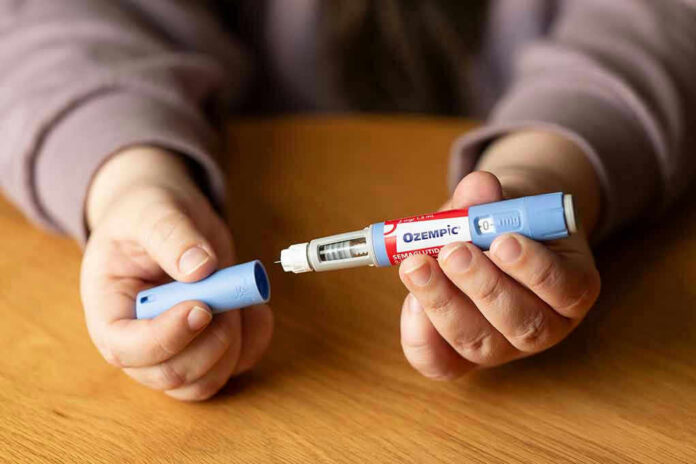
The same shots that helped millions shrink their waistlines may one day cool the fire inside arthritic joints themselves.
Story Snapshot
- Weight-loss drugs like Wegovy are now under scrutiny for possible direct anti-inflammatory effects inside joints, not just on the bathroom scale.
- Early lab and imaging work suggests glucagon-like peptide 1 (GLP-1) medicines may influence cartilage health and inflammatory signals in arthritis.
- Doctors stress a tough reality check: no GLP-1 drug is approved to treat arthritis, and the evidence is still early and incomplete.
- For now, the smartest play is using proven arthritis care while watching this new research lane develop, not chasing miracle-shot headlines.
How A Diabetes Drug Ended Up In The Arthritis Conversation
Doctors first used GLP-1 medicines like semaglutide, the active ingredient in Wegovy and Ozempic, to control blood sugar in type 2 diabetes. When people started losing significant amounts of weight, the obesity field seized on them, and the public followed. Now the story is shifting again: researchers are asking whether these same shots might calm inflammation in osteoarthritis and rheumatoid arthritis, even beyond the benefit of carrying fewer pounds across worn-out knees and hips.
Researchers recently found that the body’s own GLP-1 hormone exists only in tiny amounts inside the joints of people with arthritis, yet the drugs deliver much higher levels that can actually reach joint tissue.[1] That creates a plausible path for direct joint effects instead of everything being explained by weight loss alone. Scientists behind the work say this provides a biological basis to test GLP-1 medicines as joint-targeting therapies, while candidly admitting it proves nothing yet about symptom relief.
What The Early Studies Actually Show Inside Real Knees
One human trial followed more than four hundred people with obesity and moderate to severe knee osteoarthritis for over a year. Those who received semaglutide reported much larger drops in knee pain than the placebo group on a one-hundred-point pain scale.[9] Another study published in a leading metabolism journal reported that GLP-1 drugs seemed to reprogram the energy use of cartilage-making cells, stabilize damaged cartilage, and allow some repair, suggesting a possible disease-slowing effect rather than just numbing pain.[9]
These findings fit with broader research on semaglutide’s anti-inflammatory behavior. Laboratory and clinical work shows it can reduce pro-inflammatory chemicals in the blood and modulate immune activity in several tissues, which supports the idea that the drug family is doing more than shrinking fat cells.[5] A major review argues that GLP-1 receptor agonists appear to reduce inflammatory cytokines and may deliver added cardiovascular and liver benefits tied to that effect, though the authors still call for more mechanism-specific studies.[5]
Rheumatoid Arthritis Signals And The Reality Check
Rheumatoid arthritis, an autoimmune disease rather than simple wear-and-tear, adds another chapter. An analysis of people with rheumatoid arthritis and obesity who were prescribed GLP-1 medications found that those staying on the drugs for about a year lost weight, had slightly lower disease activity, and reported less pain than matched patients who did not use them.[3] The kicker is that improvements in pain and inflammation did not clearly track with how much weight they lost, hinting at a direct anti-inflammatory contribution.[3]
Rheumatology experts remain cautious and, frankly, appropriately skeptical. A detailed review aimed at clinicians stresses that no GLP-1 medicine has approval as a rheumatoid arthritis treatment, and there are still no large randomized trials designed specifically to test joint inflammation endpoints.[2] Early benefits are encouraging, but using powerful metabolic drugs off-label as de facto arthritis therapy before rigorous trials finish is not wise medicine or good stewardship of healthcare dollars.
Wegovy for Arthritis: Weight Loss Drug May Also Reduce Joint Inflammation, Says Studyhttps://t.co/wYl79RnHos
— Cee (@Backer9111) May 24, 2026
Most arthritis specialists today see GLP-1s as serious tools for weight, blood sugar, and heart risk management that might bring bonus joint benefits, not magic bullets that replace tried-and-true arthritis therapies.[4] Losing weight eases mechanical load on joints, improves mobility, and lowers surgical risk; if GLP-1 drugs help a motivated patient get there safely, that is a legitimate win even without miracle claims.
What To Watch Next If Your Joints Ache And The Ads Tempt You
The most important next steps are straightforward but slow: randomized trials that compare GLP-1 drugs against placebo specifically for osteoarthritis and rheumatoid arthritis, with imaging, blood markers, and symptom tracking built in.[5] Researchers also need to map how these medicines interact with existing arthritis treatments and to define which patients, if any, should receive them primarily for joint disease rather than for diabetes or obesity. Until that work is done, the responsible posture is curiosity, not blind faith.
Sources:
[1] Web – Popular weight loss drugs like Wegovy may also target arthritis …
[2] Web – Do GLP-1 Help With Rheumatoid Arthritis? Current Evidence
[3] Web – GLP-1 Drugs Reduce Rheumatoid Arthritis Symptoms – RheumNow
[4] Web – Can GLP-1 Drugs Help Your Arthritis?
[5] Web – If the evidence is there, why are GLP-1 receptor agonists not on …
[6] Web – Do GLP-1 drugs reduce inflammation? – Harvard Health
[9] Web – Weight Loss: Semaglutide May Help Treat Osteoarthritis, Study Finds