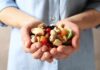
A study of 30,000 people found that fewer than 1 in 5 adults get enough of a specific heart-protecting nutrient — even when they follow standard healthy eating advice.
Story Snapshot
- A major study tracked 30,000 people and found that 500 mg of flavanols per day cuts the risk of dying from heart disease by up to 27%.
- Less than 20% of people hit that 500 mg daily target, even when following the standard “eat five fruits and vegetables a day” advice.
- Green tea, blackberries, apples with skin, and blueberries are among the best flavanol sources — but most people aren’t eating enough of them.
- The biggest trial ever run on this nutrient showed a clear drop in heart disease deaths, though it did not cut total heart events by a statistically meaningful amount.
The Nutrient Your Healthy Diet Is Probably Missing
You eat your fruits and vegetables. You follow the rules. But a large new study says the standard advice may be leaving a critical gap in your heart health. Researchers from the University of Reading, Harvard Medical School, and UC Davis tracked 30,000 adults in the United States and United Kingdom. They found that most people fall well short of 500 mg per day of flavanols — plant compounds with a direct, measurable effect on your arteries.
Flavanols are not the same as general antioxidants, and that distinction matters. They trigger your body to produce nitric oxide, a molecule that relaxes artery walls, improves blood flow, and lowers blood pressure. This is a specific biological pathway — not a vague “supports heart health” claim. The Food and Drug Administration has even issued a qualified health claim stating that consuming 200 mg or more of cocoa flavanols per day may reduce the risk of heart disease.
What the Largest Flavanol Trial Actually Found
The COcoa Supplement and Multivitamin Outcomes Study, known as COSMOS, is the biggest randomized controlled trial ever run on flavanol supplements. It tracked participants over several years and found that those taking cocoa flavanol supplements had a 27% lower risk of dying from heart disease. That is a secondary outcome, and critics are right to note that the trial’s main goal — reducing total heart events — did not reach statistical significance. That is a real limitation, and it deserves honest acknowledgment.
But dismissing the 27% drop in cardiovascular death as meaningless would be a stretch. A secondary outcome in a 30,000-person randomized controlled trial is not a footnote — it is a signal worth taking seriously. The honest read of the data is that flavanols show a strong effect on heart disease mortality, and the science is not yet finished.
Flavanols Do Measurable Things Inside Your Arteries
Beyond the big trial, smaller studies show exactly how flavanols work at the artery level. A study including UC Davis nutritionist Carl Keen found that a high-flavanol cocoa drink improved artery dilation by 47% more than a low-flavanol drink. It also doubled the production of cells that repair blood vessel walls in patients with coronary artery disease. These are not abstract numbers — they describe real physical changes in how blood moves through damaged arteries.
A 2025 University of Birmingham study added another piece to the picture. Researcher Dr. Catarina Rendeiro found that flavanol-rich foods protected artery function in young men who sat for long periods — regardless of their fitness level. That finding matters for anyone with a desk job, which in 2025 means most working adults over 40.
The Foods That Actually Deliver Flavanols
Here is where the standard advice breaks down. The “five a day” rule tells you to eat fruits and vegetables, but it does not tell you which ones are rich in flavanols. A cup of green tea delivers about 200 mg. A serving of blackberries provides roughly 250 mg. Apples eaten with the skin, plums, cherries, cranberries, blueberries, and broad beans all contribute meaningful amounts. A banana or a handful of iceberg lettuce does not move the needle.
The gap between what people eat and what their hearts need is not a mystery — it is a communication failure. Current dietary guidelines do not specify flavanol-rich foods. They treat all fruits and vegetables as roughly equal for heart health, and the data says that is wrong. Until official guidance catches up, the practical answer is simple: swap generic produce choices for the specific foods on that list, and make green tea a daily habit.
A Word on Commercial Cocoa Products
One real complication is that most cocoa sold in stores has been processed in ways that destroy flavanols. The high-flavanol cocoa used in studies is not the same as a chocolate bar or a standard hot cocoa mix. If you are counting on a nightly square of dark chocolate to hit your 500 mg target, the research does not support that assumption. Whole food sources — berries, apples with skin, green tea — are the more reliable path for most people.
Sources:
sciencedaily.com, healthline.com, ucdavis.edu, news-medical.net, medicalnewstoday.com, uscjournal.com, pmc.ncbi.nlm.nih.gov, sciencedirect.com, pubmed.ncbi.nlm.nih.gov