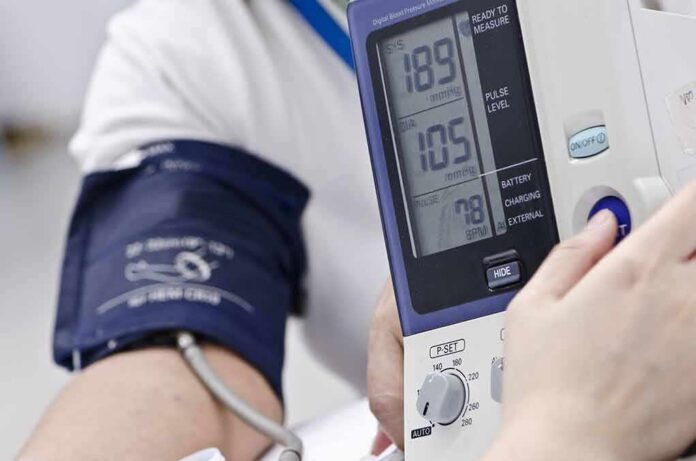
What you eat at dinner may do more for your blood pressure than the number you see at the doctor’s office.
Quick Take
- Major health groups list diet, not just readings, as a core tool for controlling blood pressure.
- The DASH eating plan and lower sodium intake are the two most recommended changes.
- Potassium-rich foods help balance sodium’s effect on blood vessels.
- Diet changes tend to work slowly and steadily, not overnight, so patience matters.
Health Groups Push Diet Over Single Readings
The American Heart Association tells patients to follow a DASH-style eating plan built around fruits and vegetables, alongside lowering sodium and watching body weight. That guidance treats one blood pressure number as a snapshot, not the whole picture. A single reading in a doctor’s office misses what someone eats every day, which shapes blood vessel health over months and years, not minutes.
Doctors keep repeating this message because hypertension builds slowly. A salty lunch won’t spike your numbers forever, but a pattern of salty lunches, year after year, stiffens arteries and forces the heart to work harder. That’s why nutrition guidance focuses on patterns and habits, not just the number on the cuff at your last checkup.
Sodium And Potassium Carry The Most Weight
The National Heart, Lung, and Blood Institute and the American Heart Association both recommend keeping sodium under 2,300 milligrams a day, with 1,500 milligrams as the ideal goal for many adults. That’s roughly a teaspoon of salt, total, from every source including packaged food, restaurant meals, and the salt shaker at home combined.
Potassium works the opposite way. Foods like bananas, spinach, and yams help the body flush out excess sodium and relax blood vessel walls, according to heart association guidance. A large research review found that diets combining low sodium with high potassium produced measurable drops in both the top and bottom blood pressure numbers. That one-two combination is why doctors push whole foods over processed ones, since packaged meals tend to be sodium-heavy and potassium-poor.
Clinical Trials Show The Combination Effect Is Real
The original DASH trial, published in the New England Journal of Medicine, found that a diet combining fruits, vegetables, and low-fat dairy cut blood pressure significantly more than a diet of fruits and vegetables alone. That study became the foundation for nearly every dietary guideline on hypertension that followed, and it still shapes advice given in doctors’ offices today.
A separate trial testing the same DASH combination found that 70 percent of participants reached a normal blood pressure reading after eight weeks, compared to just 23 percent on a typical control diet. Numbers like that make clear why doctors don’t treat diet as a minor lifestyle suggestion. It’s a frontline treatment, one that can rival medication for some patients when followed closely and consistently over time.
Global Guidelines Back A Full Pattern, Not One Fix
The International Society of Hypertension’s position paper recommends more exercise, less salt, sugar, and saturated fat, alongside more fruit, vegetables, and fiber. Notice the word “and” doing heavy lifting there. No single swap, whether cutting salt or adding a banana, replaces the need for an overall healthy pattern sustained across weeks and months, not just a single good day.
Timing Matters, But Don’t Expect Instant Results
Diet-driven blood pressure drops usually take weeks, not days, to show up clearly. Research on comprehensive lifestyle changes found average reductions in top-number blood pressure ranging from about 7 to 11 points over six months, depending on how closely people stuck to the DASH plan. That’s a meaningful drop, but it builds gradually rather than showing up the morning after one healthy meal.
Fad diets promising a fix in three days deserve skepticism. The consistent message across major medical institutions is that steady, boring, repeatable habits, cutting salt, adding potassium-rich produce, and sticking with it, beat any single quick trick chased on social media.
For readers managing high blood pressure, the takeaway isn’t complicated. Ask your doctor about ambulatory monitoring instead of relying on one office reading, and treat your grocery list as part of your treatment plan. The evidence from decades of trials points the same direction: what’s on your plate shapes your numbers as much as, if not more than, any single visit to the clinic.
Sources:
health.harvard.edu, heart.org, tandfonline.com, mayoclinic.org, sciencedirect.com, mayoclinichealthsystem.org