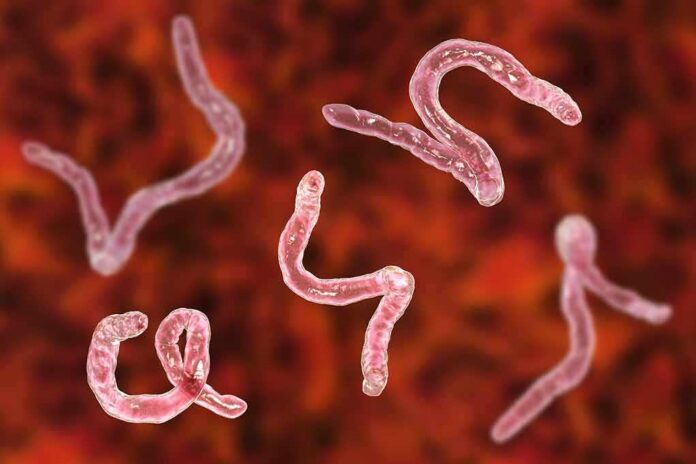
A new study found that tapeworms can actually reduce inflammation in the human gut, but only if you eat enough fiber.
Story Snapshot
- Parasitologists from the Czech Academy of Sciences found that dietary fiber is the key nutrient that lets beneficial tapeworms fight inflammation.
- Without enough fiber, tapeworms go into a hibernation-like state and lose their anti-inflammatory power entirely.
- Fiber fuels gut bacteria to produce short-chain fatty acids, which regulate the immune system and keep inflammation in check.
- No large human clinical trial has yet confirmed this effect in people, but the animal research published in Nature Communications is strong.
The Tapeworm Finding That Changes How We Think About Fiber
Most people think of tapeworms as something to get rid of fast. But researchers at the Biology Centre of the Czech Academy of Sciences just published a study in Nature Communications that flips that idea on its head. They found that certain intestinal worms can calm inflammation in the host gut, and that one single dietary factor determines whether that benefit happens at all. That factor is fiber.
Lead researcher Milan Jirků put it plainly: “When the diet contains a high proportion of structural fiber, the tapeworm is not only in excellent condition but is also able to induce an anti-inflammatory response in the host. When fiber is lacking, the worm enters an energy-saving state resembling hibernation in mammals, and its anti-inflammatory effect disappears.” That is not a minor finding. It means the worm’s benefit is completely diet-dependent.
Why Fiber Makes the Difference
Fiber does not just feed you. It feeds the bacteria living in your gut. Those bacteria break fiber down into compounds called short-chain fatty acids. Research published in peer-reviewed immunology journals confirms that these fatty acids directly regulate immune function, suppress runaway inflammation, and help the gut stay balanced. Without fiber, that whole process stalls. The bacteria suffer. And apparently, so do the worms.
The tapeworm, it turns out, depends on the same fiber-rich gut environment that your beneficial bacteria need. When fiber disappears from the diet, the worm senses the shift and powers down. It stops producing whatever signals calm the immune system. The anti-inflammatory effect vanishes. This is not the worm being lazy. It is the worm surviving a hostile environment by going dormant, much like a bear in winter.
A Decades-Long Debate Gets a New Clue
Scientists have argued about “helminth therapy,” the idea of using intestinal worms to treat inflammation, since the early 2000s. Researchers have reported anti-inflammatory effects of worms in animal models and small human studies for conditions like Crohn’s disease, multiple sclerosis, and type 1 diabetes. But no large, controlled human trial has confirmed clinical benefit. The Centers for Disease Control and Prevention and the World Health Organization still recommend deworming, not worm therapy.
This new study does not settle that debate. But it adds a critical piece of context that earlier research missed entirely. Prior helminth studies rarely controlled for diet. If participants ate low-fiber diets, the worms may have been dormant the whole time, which would explain why some trials showed little benefit. Diet may have been the hidden variable all along.
What This Means If You Are Not Hosting a Tapeworm
Here is the part that matters for everyone, not just the rare person with an intestinal worm. The fiber-gut-immune connection the study highlights is real and well-established regardless of worms. Fiber feeds good bacteria. Good bacteria produce short-chain fatty acids. Short-chain fatty acids calm inflammation. That chain of events is not in dispute. The worm study simply confirms it from a completely unexpected angle.
A new study found that dietary fiber can determine whether beneficial intestinal worms help reduce inflammation or become essentially inactive. With plenty of fiber, the worms remained healthy and supported an anti-inflammatory response, while a low-fiber https://t.co/39nSK3l7p9
— Michael W. Deem (@Michael_W_Deem) July 11, 2026
The study does leave open questions worth noting. Researchers did not specify which types of fiber work best, how much fiber is needed to keep worms active, or how quickly the anti-inflammatory effect fades when fiber drops. Those are important gaps. A follow-up human trial measuring inflammation markers in worm-positive participants on high-fiber versus low-fiber diets would answer them. Until then, the practical takeaway is straightforward: eat more fiber. Your gut bacteria need it. And if you happen to have a beneficial worm, it needs it too.
Sources:
sciencedaily.com, medicalxpress.com, scitechdaily.com, pmc.ncbi.nlm.nih.gov