Federal health officials are tracking several food poisoning outbreaks at the same time this summer, and one of them still has no known cause.
Quick Take
- The Food and Drug Administration (FDA) is investigating multiple cyclospora outbreaks at once, including one linked to iceberg lettuce and a newer one with no identified food source yet.
- A 2024 report found confirmed foodborne illness cases jumped 25% in one year, with severe hospitalizations roughly doubling.
- Food recalls tied to salmonella, E. coli, and listeria rose 41% compared to the year before.
- Experts say many shoppers wrongly assume every outbreak is connected, causing them to avoid entire food categories out of fear.
- Consumer trust in the U.S. food supply has dropped to its lowest point in over a decade.
Multiple Outbreaks Unfold at Once
The FDA’s outbreak tracking page shows several cyclospora investigations running side by side this summer. One outbreak, tied to iceberg lettuce, got an updated case count on August 5, 2026. A second, newer outbreak has no confirmed food source at all. The agency says it has started tracing the supply chain to find where the contamination began.
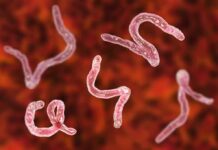
Cyclospora is a parasite that spreads through contaminated fresh produce like herbs, lettuce, and fruit. The Centers for Disease Control and Prevention warns that simply rinsing produce does not reliably remove it, which limits how much shoppers can protect themselves at home. That gap between what people can control and what they can’t is fueling much of the public’s unease.
Illness Numbers Have Climbed Sharply
A 2025 report from the U.S. Public Interest Research Group Education Fund found confirmed foodborne illness cases rose 25% in a single year, reaching 1,392 documented cases tied to contaminated food. Severe cases requiring hospitalization roughly doubled over that same period. Separately, food recalls linked to salmonella, E. coli, and listeria jumped 41% compared with the prior year.
Government researchers estimate the country sees about 800 foodborne illness outbreaks every year, meaning overlapping investigations are common rather than rare. Still, this year’s mix of an unresolved source, rising case counts, and repeated advisories has left many shoppers unsure which foods are actually risky right now.
One Outbreak Often Looks Like Many
Consumer advocates say a major source of confusion is the assumption that all the reported illnesses come from a single nationwide event. Analysts note there is no evidence supporting that idea, and the FDA is actually tracking several separate cyclospora outbreaks that may have different causes entirely. That misunderstanding pushes some shoppers to avoid whole categories of produce, even when only one specific product is under investigation.
That kind of blanket avoidance can hurt growers and sellers who had no role in any contamination, even as it fails to protect people from the specific item actually causing harm. Food safety officials continue to recommend basic steps: washing hands, keeping raw and cooked foods separate, cooking food to safe temperatures, and refrigerating leftovers promptly.
Trust in the Food Supply Keeps Slipping
A survey from the International Food Information Council found consumer confidence in the safety of the U.S. food supply has hit its lowest point in 13 years. People who are pregnant, elderly, or have weakened immune systems face the highest risk and are advised to skip certain raw or undercooked foods entirely, including raw flour, raw fish, and unpasteurized dairy.
For most healthy adults, officials say the risk from any single outbreak remains low, but the steady stream of overlapping advisories makes it harder to separate a real, specific warning from general background noise. As the FDA continues tracing the newest outbreak’s source, shoppers are left watching official updates for guidance on what, exactly, is safe to put on the table.
Sources:
pmc.ncbi.nlm.nih.gov, fda.gov, eatright.org, cidrap.umn.edu, cdc.gov, gao.gov, wwwnc.cdc.gov, wavy.com