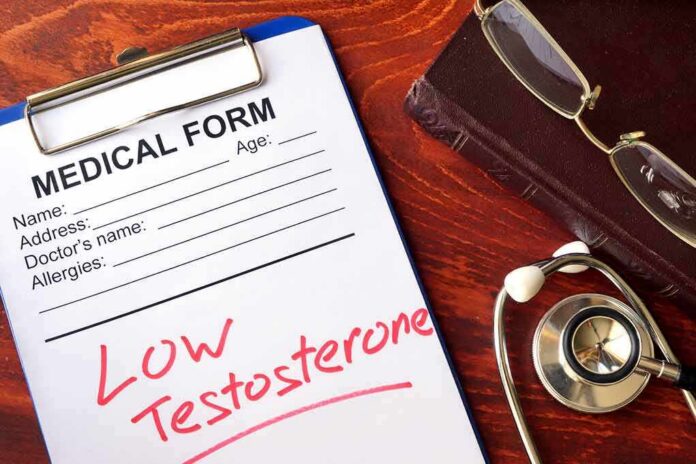
Testosterone has become more than a hormone panel value; it now operates as a cultural shorthand for vitality, a commodity in the wellness marketplace, and—increasingly—a political signal.
At a Glance
- Two conversations are getting conflated: clinical testosterone therapy for hypogonadism and a broader cultural project that equates “high T” with manhood, power, and performance.
- The hormone functions as a physiological biomarker—but also as a social signal in context; mistaking one for the other distorts both care and culture.
- Influencer and clinic ecosystems are normalizing testing and treatment among young, healthy men, often downplaying fertility and cardiometabolic risks.
- Political and media adoption of testosterone-as-strength language is amplifying demand and hardening identity narratives without resolving medical uncertainties.
What testosterone is—and what it isn’t—in medicine
In endocrinology, testosterone replacement therapy (TRT) has a narrow, legitimate purpose: relieve symptoms and risks caused by demonstrated androgen deficiency, typically confirmed with repeat morning blood measurements, clinical evaluation, and a workup that rules out reversible causes. In that frame, testosterone is a tool, not a totem. It can raise serum levels, improve sexual function and energy in appropriately diagnosed men, and sometimes help bone density or anemia. None of that makes it an essence of masculinity. The mistake—recurrent across a century of hormone lore—is to treat a lab value as a proxy for character or capacity. Contemporary synthesis work on biology and behavior is explicit: testosterone is both a physiological marker and a social signal whose meaning depends on context.
That dual role matters because it explains why the hormone now sits at the center of competing claims. Clinicians speak the language of indications and outcomes; marketers and influencers speak the language of identity and optimization. When the latter eclipses the former, medical decisions drift.
How “T” became a cultural shorthand for manhood
The current moment was not an accident; it is the latest turn in a long cycle of medicalizing masculinity. Scholars analyzing masculinized wellness marketing describe testosterone as a “cultural imaginary”—a charged symbol used to naturalize claims about what men should be, then sold back as a quick fix for status anxiety and diffuse fatigue. This imaginary thrives in the self-optimization economy, where a crisis narrative (“low T is stealing your edge”) meets an abundant supply of products, protocols, and before–after testimonials. The result is a market logic: if manhood is measurable, it is modifiable—and purchasable.
Journalistic and academic coverage converges on the same pattern. Social platforms teem with “testmaxxing” reels and threads that instruct young men on food hacks, cold exposure, supplements, and ultimately TRT—inviting them to treat a hormone level as a scoreboard for dominance, sexual prowess, and drive. Researchers reviewing behavior across biology and social domains emphasize the caution this demands: the correlates of testosterone shift with setting and role; interpreting it as a fixed essence of capability misleads both patients and publics.
From optimization to overreach: where the evidence flags risk
When an identity narrative outruns clinical guardrails, predictable problems follow. An international analysis summarized for public audiences found influencer content encouraging testosterone testing and therapy among healthy young men—normalizing unnecessary medicalization while minimizing discussion of genuine risks, including infertility, erythrocytosis and clotting, cardiometabolic complications, and even paradoxical sexual side effects. Those risks are not theoretical; suppression of the hypothalamic–pituitary–gonadal axis can impair sperm production, and inadequate screening for sleep apnea, polycythemia, or underlying cardiovascular disease can turn a lifestyle pitch into a clinical setback.
Parallel reporting frames a booming low-T marketplace where clinics and content creators convert masculinity anxiety into recurring revenue, with testing packages, subscription injections, and upsold adjuncts occupying the territory between sports medicine and self-help. None of this refutes the value of TRT for men who meet guideline criteria; it does show how a hormone can be repurposed as an all-purpose answer to problems it cannot biologically solve.
Politics and the megaphone effect
Once a biological term becomes rhetoric, scale and stakes change. Coverage of Washington’s current discourse reports senior figures invoking testosterone as a marker of male health and national strength—a migration of “T-talk” from online subcultures to government vocabulary. Separately, analysis of military screening debates shows how manosphere framing—testosterone as virility, power, lethality—can shape or justify institutional choices, conferring official legitimacy on a contested practice. Whether or not specific policies endure, the political uptake amplifies demand signals: if leaders talk about testosterone as a civic virtue, clinics and influencers will meet the market that rhetoric creates.
This megaphone effect doesn’t settle the science; it refracts it. Medical nuance tends to flatten under identity pressure. Skepticism about indiscriminate screening gets read as hostility to manhood rather than a method-bound position; risks become “fear-mongering,” and criteria feel like gatekeeping. That is the predictable collision when a lab value is drafted into a culture war.
What the survey and adoption signals really tell us
Public-interest pieces have highlighted striking demand-side indicators: most men in one widely cited survey said their testosterone levels matter to them, and nearly half viewed it as a measure of their masculinity. As signals of sentiment, these numbers are meaningful; they explain market growth and content virality. They are not, however, clinical indications. Likewise, reporting on prescription volume and telehealth convenience chronicles cultural uptake; it cannot on its own adjudicate appropriateness. That requires denominator-aware audits—linking prescriptions to documented low levels, symptom scores, and comorbidity screening—that journalism and commentary call for but do not yet comprehensively provide.
An expert reading, then, is not that interest or prescribing is inherently suspect; it is that sentiment metrics and utilization trends need to be matched with evidence about who benefits, who is harmed, and whether practice conforms to endocrine guidelines. Until those links are firmly built, enthusiasm will keep outrunning knowledge.
What a sound testosterone pathway looks like
The mechanics of good care are not mysterious. A credible pathway includes: two separate morning total testosterone measurements, ideally with free testosterone where binding proteins are abnormal; a symptom inventory that distinguishes androgen deficiency from sleep debt, depression, overtraining, alcohol or opioid effects, and obstructive sleep apnea; targeted labs (LH/FSH, prolactin, thyroid, iron status) to rule in primary or secondary causes; fertility discussions before therapy; and informed consent outlining benefits, uncertainties, and risks. Dose and route selection should be individualized, with hematocrit checks, PSA and prostate assessment appropriate to age and risk, and cardiometabolic surveillance in higher-risk patients. This is slower than an online starter kit—but it is medicine, not mood music.
This is also where the social and clinical frames must be pried apart. Testosterone can be one instrument in a larger intervention that includes sleep, nutrition, resistance training, and stress modulation; it is not a shortcut past those fundamentals. Influential voices sometimes present TRT as identity restoration or cultural reclamation. That is rhetoric, not an indication.
Practical counsel for men navigating the noise
If symptoms are real, pursue a medical—not algorithmic—workup. Ask for repeat morning labs, clarity about diagnostic cutoffs, and an explanation of alternative causes. If fertility matters to you, say so before any prescription. Demand a plan for monitoring hematocrit and cardiometabolic risk. Be skeptical of identity-forward marketing that promises transformation on a timetable; in physiology, there are tradeoffs and lags. Use the hormone, if indicated, to support function—not to perform a narrative about who you are.
Bottom line
Testosterone therapy is a legitimate intervention for documented deficiency. But a hormone cannot carry the weight of a cultural project. The evidence supports a clear separation: treat hypogonadism carefully and well; resist turning a biomarker into a referendum on masculinity. When medicine stays in its lane, men get better care. When identity commandeers the conversation, everyone gets more heat than light—and too many end up medicated for a story rather than a diagnosis.
Sources:
menshealth.com, tpr.org, ctvnews.ca, news-medical.net, tompeteet.substack.com, aibm.org, vox.com, pmc.ncbi.nlm.nih.gov