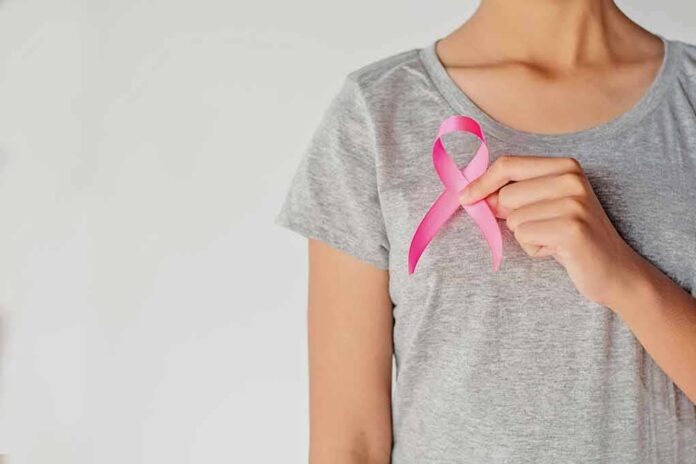
Breast Cancer Awareness Month runs every October, but doctors say the pink ribbons alone do not catch a single tumor.
Quick Take
- October 1 to 31 marks National Breast Cancer Awareness Month, a tradition tracked by health groups worldwide.
- Studies show most people can spot a lump but miss other warning signs like skin dimpling or nipple changes.
- The White House and the World Health Organization both urge Americans to act, not just wear a color.
- Screening, family history checks, and symptom education matter more than pink branding on store shelves.
A Monthlong Tradition Built Around One Goal
National Breast Cancer Awareness Month falls every year from October 1 through October 31, a date range long recognized by advocacy groups and health organizations alike. The World Health Organization frames this year’s theme as “Every Story is Unique, Every Journey Matters,” a message meant to honor survivors while pushing for better access to screening and treatment worldwide.
Most People Miss the Warning Signs That Are Not a Lump
Multiple studies reveal a troubling gap in public knowledge. In one United Kingdom study of women at higher risk for breast cancer, only 51 percent recognized nipple rash as a symptom, and just 62.7 percent knew skin redness could be a sign. A separate survey found even lower numbers, with barely a third of respondents aware that a retracted or downward-pointing nipple could signal disease.
These non-lump symptoms are not rare oddities. Doctors and cancer charities list several lesser-known warning signs including breast puckering, loss of feeling in part of the breast, pitting or thickening skin, and unexplained nipple discharge. Someone who only checks for a lump every October, then forgets about it for eleven months, is missing most of the picture painted by actual medical research.
Global Health Leaders Push Past the Ribbon
The World Health Organization’s advocacy toolkit for 2025 does not stop at raising a flag or lighting a building pink. It calls for local screening events, policy advocacy, and improved access to care as core parts of the observance. That framing treats October less like a branding exercise and more like a coordinated public health campaign with measurable goals.
This matters because awareness without action changes nothing in a doctor’s office. A woman who wears a pink shirt but never learns to recognize skin dimpling or nipple retraction gains no real protection. The gap between symbolic support and practical knowledge is exactly what researchers keep flagging, year after year, in country after country.
What Real Support Looks Like This October
Real support starts with simple, repeatable habits. Learn your family history. Schedule a screening if you are due. Take five minutes to study what non-lump symptoms actually look like, because that knowledge could shave weeks or months off a diagnosis. Share that information with a sister, a mother, a friend, rather than just sharing a pink graphic online.
None of this requires abandoning pink ribbons or October traditions. It requires adding substance underneath the symbol. Awareness months work best when they translate into appointments kept, self-exams performed correctly, and conversations had with a doctor about risk factors. That is the standard both the White House and global health leaders have set for this October, and it is a standard worth meeting.
Sources:
artofhealthyliving.com, whitehouse.gov, eprints.whiterose.ac.uk, who.int, ijcmph.com, ecancer.org, pmc.ncbi.nlm.nih.gov