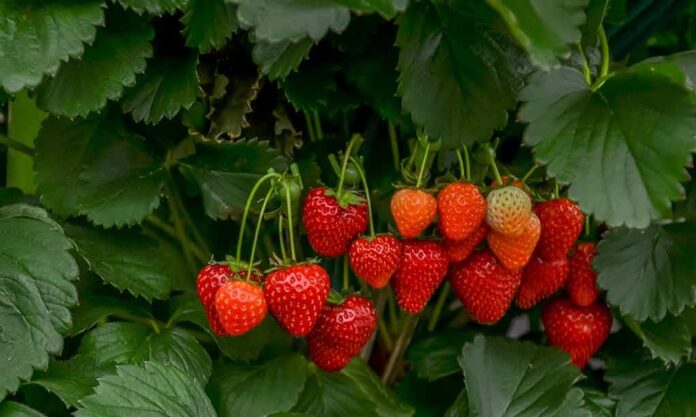
A daily bowl of strawberries may take some of the sting out of monthly cramps, according to a new clinical trial out of Spain.
Story Snapshot
- A randomized trial tested 250 grams of fresh strawberries daily for one month in young women with painful periods.
- The study included 64 college-age participants split between a strawberry group and a control group.
- Researchers used pain and distress scales to track results, building on earlier work from the same research team.
- Wider science on food and period pain remains mixed, with some studies backing benefits and others finding no real effect.
What The New Strawberry Trial Actually Found
Researchers at the University of Huelva in Spain ran a randomized clinical trial on 64 young women with primary dysmenorrhea, the medical term for period pain that has no underlying disease cause. Thirty-three women ate 250 grams of fresh strawberries every day for one month, while 31 others served as a control group and changed nothing about their routine.
The strawberries used in the trial came from a specific cultivar grown in the Huelva region of Spain, called Fortuna, and researchers tracked pain using the Visual Analogue Scale along with a validated menstrual distress questionnaire called MEDI-Q. Lead researcher Dr. Elia Fernández Martínez, a midwife and nursing professor, has been studying this question since an earlier phase of the project first flagged strawberries as worth testing directly.
Why Scientists Zeroed In On This Fruit
The idea did not come out of nowhere. Earlier survey research on young women found that those who already ate strawberries regularly reported lighter bleeding and less menstrual pain than those who did not, which gave researchers a reason to test the fruit in a controlled setting. Strawberries carry antioxidant and anti-inflammatory compounds, and inflammation is a known driver of the uterine cramping that makes periods miserable for millions of women.
Primary dysmenorrhea is not a small or rare problem. It affects more than 60 percent of young Spanish women and disrupts school, work, and daily life for many of them every single month. That scale is exactly why a low-cost, food-based fix draws so much attention. If something as simple as fruit at breakfast can ease that burden, it matters to a huge number of households.
Where This Study Fits Into A Bigger Picture
The strawberry trial does not stand alone. It joins a long line of nutrition studies on period pain that often show early promise but struggle to hold up once bigger, more rigorous trials try to repeat them. One review of dietary supplement research for dysmenorrhea found no high-quality evidence supporting any single supplement, a reminder that self-reported pain scores are easy to influence and hard to prove beyond doubt.
Other reviews paint a similarly cautious picture. A large analysis of 28 different food and supplement studies found most reported some positive effect, but the studies varied so much in design that firm conclusions stayed out of reach. Another study involving over 300 women found strawberry eaters reported fewer cramps, but the difference did not reach statistical significance, meaning it could have happened by chance.
What Everyday Readers Should Take From This
None of this means the Huelva trial is worthless. A randomized design with a true control group is a solid way to test a claim, and 250 grams of strawberries daily is a safe, inexpensive habit almost anyone can try without a doctor’s permission. Readers who value personal responsibility and low-cost health choices over expensive prescriptions will find this an easy experiment worth considering.
The honest takeaway is that strawberries look like a promising, low-risk addition to a diet already rich in fruits and vegetables, not a proven cure that replaces medical care. Women dealing with severe period pain should still talk to a doctor, especially since researchers themselves note diet is one piece of a much larger picture that includes exercise, sleep, and overall nutrition.
For now, the science offers a hopeful, if modest, signal. A month of strawberries costs little and risks nothing, and for the millions of women who dread that time of month, even a small edge is worth a try.
Sources:
mindbodygreen.com, frontiersin.org, fruitnet.com, centerwatch.com, patlynk.com, opentrials.com, repository.itsk-soepraoen.ac.id, pmc.ncbi.nlm.nih.gov, pubmed.ncbi.nlm.nih.gov