The air trapped inside your house can carry more pollution than the air outside, and most of the fixes cost little or nothing.
Quick Take
- Finding and removing pollution sources works better than any gadget you can buy.
- Opening windows helps only when outdoor air quality is actually good.
- Filters need regular attention, though exact timing depends on your situation.
- Moisture control and venting fumes cut down on mold, chemicals, and odors.
Source Control Comes Before Any Purchase
Health experts agree that removing a pollution source beats trying to filter it out later. Dust, smoke, excess moisture, and harsh cleaning chemicals top the list of common culprits inside homes. The advice is simple: find what’s making the air bad first, then eliminate it, instead of layering gadgets on top of a problem that’s still there.
That same logic applies to everyday habits most people never think twice about. Burning candles, frying food, and running a vacuum can all kick particles into the air you breathe. During wildfire smoke events, federal guidance has told households to skip those activities entirely until the outdoor haze clears.
Ventilation Helps, But Only At The Right Time
Cracking a window seems like an easy way to flush out stale air. That’s true much of the time, but it carries a catch. Homeowners are told to check local pollution reports before opening windows, since outdoor smog, pollen, or wildfire smoke can make indoor air worse, not better, the moment it rushes in.
Kitchens and bathrooms need their own ventilation plan separate from open windows. Running exhaust fans while cooking pulls grease particles and combustion byproducts out before they spread through the house. The same goes for steam after a hot shower, which left unchecked turns bathroom walls into a breeding ground for mold.
Filtration And The Maintenance Schedule Nobody Enforces
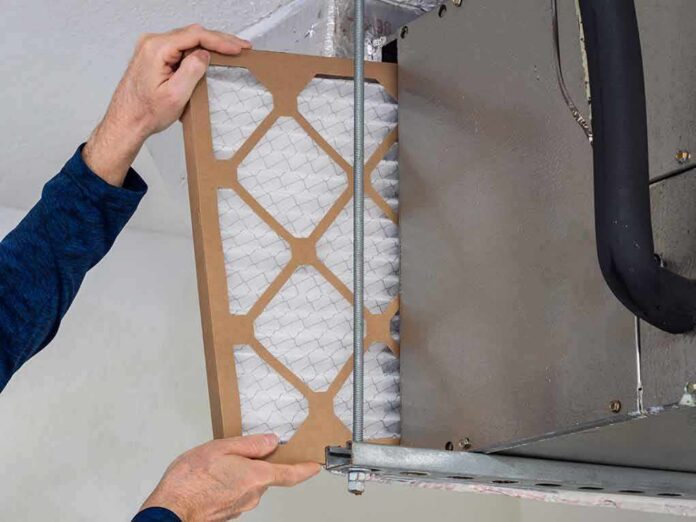
Air filters only work if they’re actually changed. Lifestyle guidance recommends swapping filters every two weeks for the cleanest possible air, a tight schedule meant for maximum purity rather than minimum upkeep. Federal wildfire-smoke guidance instead points to a one-to-three-month window for typical home filter replacement, with recirculating HVAC settings and portable air cleaners recommended when smoke rolls into a region.
That gap isn’t a contradiction so much as a difference in goals. A household chasing the lowest possible dust and allergen levels year-round may change filters more often than one simply trying to keep a furnace running efficiently during a smoke event. Either way, a filter sitting unchanged for six months or a year is doing almost nothing.
Chemicals, Odors, And The Upgrades Worth Considering
Volatile organic compounds, the gases released by paint, new furniture, and cleaning products, don’t respond to the same fixes as dust or smoke. Reducing exposure means choosing lower-emission products and giving fresh air time to clear a room after painting or deep cleaning, rather than relying on a filter built mainly to trap particles.
Home feeling stuffy now that the windows are staying closed? It might be time to talk indoor air quality. Click the link for tips to help your home breathe easier. https://t.co/3Jyt2aYVsK #GoWithPetro #YourLocalHVACPros #LocalHVACPros #IndoorAirQuality #BreatheEasy pic.twitter.com/ZXXxkNH6Aw
— Petro Home Services (@PetroHome) November 6, 2026
Beyond filters and fans, some households invest in longer-term upgrades such as improved ventilation systems or moisture-control equipment tied to overall home health. Detectors for carbon monoxide and other gases round out a practical setup, catching dangers that no amount of window-opening or filter-changing can fix on its own.
Putting The Pieces Together Without Overcomplicating It
No single action solves every indoor air problem, because dust, moisture, gases, and smoke each demand a different response. The strongest approach layers source control first, ventilation second, and filtration third, adjusting the mix based on season, local air quality, and what’s actually happening inside the house that day.
None of this requires a complicated system to start. Checking local air reports before opening a window, running exhaust fans during cooking and showers, and actually replacing filters on a set schedule cover most of the ground. The remaining decisions, like whether to add a dedicated air purifier, come down to specific needs rather than a one-size-fits-all rule.