Scientists say many cancers may hide for decades, then awaken when aging’s own programs flip the lights on. [4]
Story Snapshot
- A peer-reviewed review proposes a two-stage model: early-life disruptions lie dormant until later-life genetic programs unmask them. [4]
- The framework aims to explain why cancer, osteoarthritis, and latent infections often erupt in old age. [2]
- Independent work describes aging in two phases and catalogs hallmarks that bridge damage and dysfunction. [5][7]
- The model remains a theory; prospective human evidence and biomarker thresholds are not yet established. [4][5]
A new map for why disease arrives late
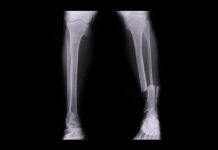
University College London researchers outline a two-stage model of aging diseases: first, early-life disruptions such as infections, mechanical injuries, or mutations create contained damage; second, later-life biological programs—acting through normal “wild-type” gene activity—progressively unmask that latent damage into full-fledged disease. The model directly includes osteoarthritis, cancer, and relapse of old infections as examples consistent with this sequence. The authors frame these hidden injuries as seeds that germinate when senescent changes accumulate. [4]
An accompanying summary emphasizes why so many chronic illnesses emerge after midlife. It argues that the conjunction of early disruptions and later genetic activity provides a unified explanation for the timing of cancer and arthritis. That timing matters: if early injuries can be reduced or cleaned up before aging’s switch flips, later disease may be delayed or blunted. This claim remains a mechanistic synthesis rather than a direct longitudinal proof in humans, but it offers testable directions. [2]
How two phases could fit what we already know
Separate scholarship conceptualizes aging itself as a two-phase process, marked by a transition from gradual risk to abrupt expression of classic aging hallmarks. Those hallmarks—genomic instability, telomere attrition, epigenetic alterations, proteostasis decline, inflammation, and stem cell exhaustion—build a bridge between earlier molecular insults and later systemic failure. Read together, these lines of work suggest a staging: injuries accumulate quietly, then intersect with senescence biology to push tissues across a functional threshold. [5][7]
That bridge matters for cancer. Reviews of the aging–cancer relationship already describe a tightly intertwined cycle: genomic instability and chronic inflammation accelerate both tumor initiation and the aging process, while cancer treatments can intensify hallmarks associated with aging. The two-stage proposal does not replace that cycle; it tries to organize when and how dormant seeds become visible tumors as senescence-associated programs reshape tissue ecosystems. It suggests prevention windows earlier than oncology typically targets. [9]
Where the model shines—and where it still wobbles
Childhood infections, workplace injuries, and inherited or somatic mutations plausibly leave lasting marks; later-life shifts in immunity, tissue repair, and gene regulation plausibly unmask them. The review names concrete pathologies and mechanisms, providing a practical inventory for researchers to chase. Yet it remains a theory paper without prospective cohorts linking specific early insults to later, matched cancers or arthritis endpoints in the same individuals. [4]
The field’s most visible frameworks remain the hallmarks-of-aging model and multifactorial cancer–aging reviews, which already accommodate bidirectional complexity. Without validated biomarkers defining the boundary between “disruption-only” and “program-plus-disruption,” the new staging risks sounding like relabeling. Useful synthesis must pay off in prediction: time-to-event models that beat existing risk tools, or animal interventions proving that early repair lowers late disease despite aging’s march. [7][9]
The clock does not tick evenly—does that help or hurt?
Large-scale molecular profiling suggests the body changes in bursts, with clusters of rapid shifts occurring around the 40s and 60s. That pattern undercuts any narrative of a smooth, single ramp to disease but does not contradict a two-stage idea; it may pinpoint the decades when unmasking accelerates. If midlife transitions amplify inflammation, degrade repair, or alter epigenetic control, then once-silent damage could cross the line into overt pathology. Testing that link demands longitudinal biomarker studies. [10]
Scientists discover a two-stage aging process that may cause cancer and arthritis
A new theory suggests many age-related diseases may actually start decades before symptoms appear. Researchers say early-life damage — from infections, injuries, or genetic mutations — can remain…
— The Something Guy 🇿🇦 (@thesomethingguy) May 22, 2026
Practical next steps look straightforward and hard. Cohorts should track early-life infections, injuries, and mutation burden against later cancer and osteoarthritis with preregistered thresholds for stage transitions. Tissue archives should be mined for latent injury foci that predate clinical escalation. Animal models should repair early damage and observe whether late cancers or joint degeneration fall even as aging proceeds. If results hold, public health gains could come from early cleanup, not just late rescue. [4][5]
Sources:
[2] Web – How aging leads to disease: New two-stage model explains age …
[4] Web – [PDF] Aging as a multifactorial disorder with two stages – UCL …
[5] Web – Ageing as a two-phase process: theoretical framework – Frontiers
[7] Web – Aging Hallmarks and Progression and Age-Related Diseases – PMC
[9] Web – Two Waves of Aging: How Midlife Biomolecular Shifts Accelerate …
[10] Web – The Aging–Cancer Cycle: Mechanisms and Opportunities for … – PMC