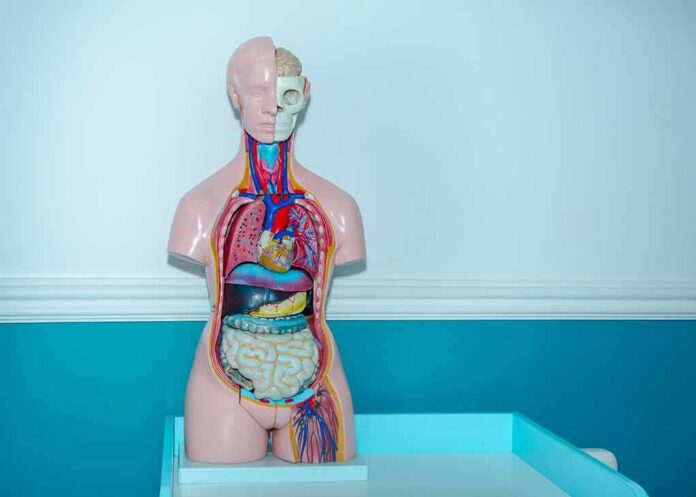
Your child’s gut lining is one cell thick, held together by microscopic gates that decide what gets into the bloodstream and what stays out.
Story Snapshot
- Integrative pediatrician Dr. Elisa Song explains “leaky gut,” or increased intestinal permeability, in a podcast clip aimed at parents.
- She describes the gut lining as a single-cell wall held together by tight junctions and proteins like zonulin, claudin, and occludin.
- Song points to a Japanese study on food emulsifiers and an autoimmune link, while noting it shows correlation, not causation.
- Medical literature backs the basic biology, though researchers still debate how far permeability changes explain broader childhood symptoms.
What Dr. Song Actually Told Parents
Dr. Elisa Song, trained at Stanford, New York University, and the University of California, San Francisco, used the clip to break down a term many parents hear but few understand. She defined leaky gut as increased intestinal permeability, a condition where the gut’s protective lining lets more than intended pass through into the bloodstream. Her framing matches language she has repeated across nearly a dozen podcast appearances since 2024.
Song described the intestinal lining as just one cell layer thick, held together by structures called tight junctions. She named specific proteins, including zonulin, claudin, and occludin, that regulate how tightly those junctions stay shut. When those gates loosen too much, she explained, toxins, bacteria, and viruses can slip through into the blood, triggering inflammation elsewhere in the body.
The Science Behind the Simple Explanation
Song’s basic description lines up with what shows up in medical journals. Researchers studying pediatric gastrointestinal disease describe intestinal permeability as a real, measurable condition, often tested through a lactulose and mannitol urine ratio. Reviews confirm that tight junction proteins control paracellular pathways, and that disruption of those junctions is tied to conditions ranging from inflammatory bowel disease to malnutrition-driven gut damage.
One review specifically flags zonulin as a biomarker researchers use to track gut permeability in children with autoimmune conditions like Type 1 diabetes, noting elevated zonulin levels alongside other inflammation markers in affected kids. That gives Song’s terminology a grounding in published pediatric research rather than invented vocabulary, even though the studies focus on distinct, diagnosed conditions rather than a catch-all wellness label.
Citing Studies, With a Caveat Attached
Song backed her explanation with published research rather than leaving it as theory. She referenced a Japanese study linking food emulsifiers to autoimmune disease and a Stanford study connecting fermented foods to greater microbiome diversity. Notably, she flagged the emulsifier findings herself as correlation, not causation, a distinction that matters when parents are deciding what to cut from a child’s diet.
Turning Theory Into a Daily Plan
Song didn’t stop at biology. She gave parents an operating list: more fiber, more phytonutrients, fermented foods, plus attention to breathing, movement, hydration, and sleep. She also pushed practical skills like reading food labels and cooking at home, folding gut science into everyday habits rather than leaving it as an abstract medical concept parents can’t act on.
That approach mirrors her published “Gut-Brain ReSET” framework, which lists “seal and heal the leaky gut” as a defined step alongside dietary elimination trials for gluten and dairy. It’s a structured protocol, not a loose suggestion, and it shows up consistently across her public materials from 2024 through 2025.
Where the Research Still Draws Lines
Pediatric gastroenterology researchers generally agree gut permeability is real and measurable in specific disease contexts, including inflammatory bowel disease, malnutrition, and premature infant complications like necrotizing enterocolitis. Where the field remains more cautious is extending permeability findings to broader, non-specific childhood symptoms. One systematic review found limited evidence connecting permeability changes directly to outcomes like childhood stunting, showing the science supports narrower conclusions than sweeping wellness claims sometimes suggest.
That gap doesn’t undercut what Song told her audience. Her core claims about permeability, tight junctions, and barrier proteins match established biology. The distinction matters for parents weighing how far to extend those concepts, since disease-specific research and broad symptom-management advice sit on different levels of evidence, even when they share the same vocabulary.
Sources:
youtube.com, linkedin.com, documentinghope.com, pmc.ncbi.nlm.nih.gov, mdpi.com