A dying woman screamed for half an hour while dozens of neighbors listened, and almost none of them picked up a phone.
Quick Take
- Landmark 1968 experiments found that having more bystanders around actually slows down whether anyone helps in an emergency.
- Researchers call this diffusion of responsibility: when everyone can act, each person feels less personally on the hook.
- Real history shows the opposite is possible too. Ordinary people in Nazi-occupied Denmark and elsewhere risked their lives to save strangers.
- Martin Luther King Jr. warned in 1961 that silence from good people, including church leaders, lets injustice keep going unchecked.
The Experiment That Changed How We See Inaction
In 1968, psychologists John Darley and Bibb Latané ran a now-famous study on why people fail to help strangers in trouble. They found that when more bystanders were present, each person felt less personal responsibility to act, and reporting an emergency took longer. The effect was statistically strong, not just a hunch. Researchers called it diffusion of responsibility, and it changed how social scientists study crowds.
The same researchers followed up with another experiment, putting people alone, with two passive strangers, or in groups of three, and filling the room with smoke. People alone reported the smoke fast. People surrounded by others who did nothing often sat there longer, reading signals from calm faces instead of trusting their own eyes. The group didn’t make anyone braver. It made everyone wait for someone else to move first.
Why Groups Make Cowards of Decent People
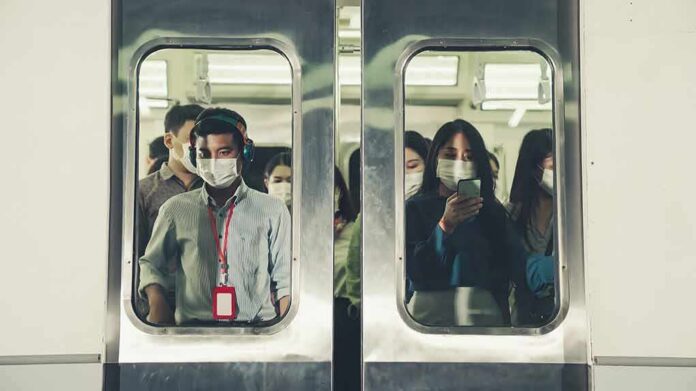
This isn’t about weak character. It’s about math nobody does on purpose. When one person sees trouble, all the responsibility sits on their shoulders. When thirty people see the same trouble, that responsibility gets sliced thirty ways, and so does the blame for doing nothing. Everyone assumes somebody else already called for help. That assumption, repeated in every head in the room, is how a crowd can watch and still do nothing.
The idea traces back partly to the 1964 murder of Kitty Genovese in New York, long described as a case of dozens of witnesses who did nothing while she was attacked. That specific retelling has been challenged and refined over the decades. But the broader pattern it inspired, that crowds can suppress individual action, held up again and again in controlled experiments that followed.
When Silence Has a Body Count
History offers sharper stakes than a lab experiment. After German forces began rounding up Danish Jews in October 1943, ordinary citizens and resistance members organized a quiet rescue, smuggling families to the coast where fishermen ferried them to safety in neutral Sweden. Diplomats like Raoul Wallenberg and Chiune Sugihara used paperwork, forged documents, and sheer nerve to pull people out of danger when speaking up carried real, mortal risk.
Those rescues worked because individuals refused to wait for someone else to act first. They also came at enormous personal risk, which is worth remembering before anyone demands courage from the comfort of a couch. Martin Luther King Jr. made a similar point in 1961, telling a national church assembly that “all too many ministers are still silent while evil rages,” a rebuke aimed squarely at people positioned to speak but choosing comfort instead.
What This Means Outside the Lab
None of this proves that every quiet coworker or passive neighbor is complicit in some larger wrong. The lab studies measured how fast strangers reported smoke or emergencies, not whether silence always equals approval or whether speaking up always helps. Stretching a 1968 psychology experiment into a verdict on every modern injustice asks more of the data than it can deliver.
What the research does support is simpler and still worth sitting with. People are wired to look around before they act, and crowds can quietly talk each person out of doing the right thing. Knowing that mechanism exists is the first step to overriding it. The next time something looks wrong and a room full of people is doing nothing, that silence isn’t proof it’s fine. It might just be thirty people waiting on each other.
Sources:
youtube.com, ucdenver.edu, garfield.library.upenn.edu, sfi.usc.edu, home.army.mil, web.archive.org