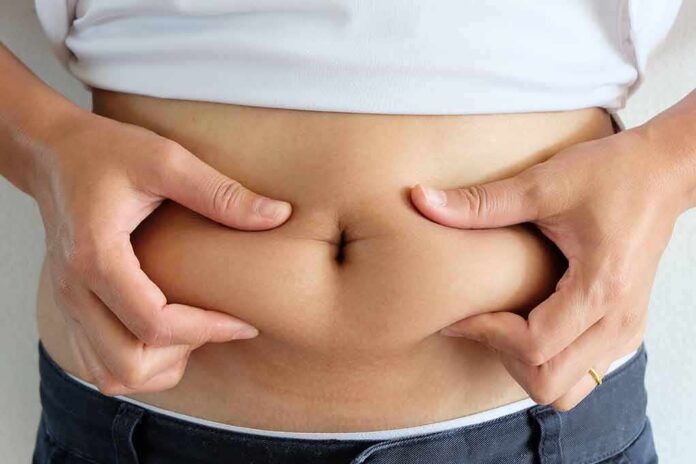
Hormone therapy will not melt away pounds on its own, but six years of research and real-world use show it can reshape where fat sits on the body.
Quick Take
- Hormone replacement therapy (HRT) is not an FDA-approved weight-loss drug, but it can shrink belly fat in menopausal women.
- Studies show HRT often keeps total body weight steady while cutting visceral fat, the dangerous kind around organs.
- How you take HRT matters. Patches and gels work differently in the body than pills.
- Doctors increasingly pair HRT with GLP-1 weight-loss drugs, and early data suggests the combo may boost results.
What Six Years On Hormone Therapy Actually Showed
A woman who tracks her own body for six years on hormone therapy learns what clinical trials confirm again and again. The scale barely moves, but the body composition shifts. A Wiley-published study on postmenopausal women found relative fat mass dropped significantly in the HRT group compared to placebo, even though total body weight stayed nearly identical between groups. That is not weight loss in the traditional sense. It is a quiet redistribution away from fat and toward better proportions.
The Belly Fat Connection Researchers Keep Confirming
Menopause pushes fat toward the belly and away from hips and thighs, a shift tied to falling estrogen. Multiple studies show hormone therapy can blunt that shift. A cross-sectional study of about 1,500 postmenopausal women found current hormone therapy use was linked to lower total and visceral fat compared to women not on treatment. Visceral fat matters because it wraps around organs and raises risk for heart disease and diabetes, not just clothing size.
Weight Watchers, a brand built entirely around weight management, reviewed the evidence and reached a similar conclusion. The company reports little proof that HRT alone causes weight gain, and notes some studies link it to modest drops in body mass index and waist size, especially early in menopause. That matters because many women avoid starting hormone therapy out of fear it will pack on pounds. The research says otherwise.
Why The Method Of Delivery Changes The Outcome
Not all hormone therapy behaves the same way once it enters the body. Research from the Garvan Institute found that HRT prevented gains in abdominal fat mass overall, but oral estrogen pills reduced fat burning and increased fat mass while transdermal patches did not cause those same problems. That is a meaningful distinction for any woman weighing her options with a doctor. A patch and a pill are not interchangeable when it comes to metabolic effects.
What Major Medical Groups Actually Say About Weight Loss
No major medical authority markets hormone therapy as a diet tool. Medscape reported that estrogen therapy studies show small waist circumference improvements over placebo, but no meaningful change in total body weight, and experts stress HRT is not viewed as an obesity treatment. That is an important caveat for anyone hoping hormones alone will solve stubborn midlife weight gain. The honest answer sits between two extremes: not useless, not magic.
Not Every Study Agrees, And That Is Worth Knowing
Research published in PMC followed women through the menopause transition and found both hormone therapy and comparison groups gained weight and body fat, with no significant difference between them. The authors concluded midlife weight gain is likely driven mainly by age rather than hormone levels alone. That finding does not cancel out the belly-fat benefits seen elsewhere. It simply confirms that hormone therapy works on fat distribution more reliably than it works on the number on the scale.
The New Frontier: Combining Hormones With GLP-1 Drugs
Doctors are now studying whether pairing hormone therapy with GLP-1 medications like tirzepatide produces better results than either treatment alone. U.S. News reported that a 2026 study in The Lancet Obstetrics, Gynaecology & Women’s Health examined whether hormone therapy influenced outcomes for women using these drugs during menopause. Early clinical chatter among physicians suggests postmenopausal women on tirzepatide who also used menopause hormone therapy lost more weight than those on the drug alone.
Postmenopausal women on tirzepatide lost more weight if they were also on menopause hormone therapy. Most people do not expect that.
A Mayo Clinic retrospective cohort in The Lancet Obstetrics, Gynaecology, & Women’s Health looked at 120 postmenopausal women with overweight or…
— Dr. K, M.D. (@DrKERMD) September 22, 2026
The bottom line for anyone considering hormone therapy strictly for weight purposes is straightforward. It will not replace diet, exercise, or dedicated weight-loss medication. But for the specific problem of stubborn belly fat and muscle loss that shows up after menopause, six years of accumulated research says hormone therapy earns its place in the conversation, especially when delivered through the skin rather than swallowed as a pill.
Sources:
healnourishgrow.com, weightwatchers.com, health.usnews.com, mavenclinic.com